

TL;DR: If your well is running dry, the first move is to shut the pump off so you don’t burn it out, then figure out whether the problem is temporary (drawdown, seasonal) or permanent (aquifer depletion). From there, your real options are lowering the pump, deepening or rehabbing the well, drilling a new one, hauling water, or installing an atmospheric water generator. New well drilling runs $5,000 to $25,000 in most regions and $40,000 to $100,000+ in difficult geology, with no guarantee of hitting water. A whole-home Hydropack starts at $137/month financed and produces certified water from day one, no drilling required.
When the kitchen tap sputters and you realize your well is running dry, the next 48 hours are about protecting the equipment you still have, getting a real diagnosis, and choosing between five concrete paths forward. This guide walks through each one with the actual costs and tradeoffs, including the one most well drillers will not mention: an atmospheric water generator that pulls water out of the air instead of the ground.
What Should I Do First If My Well Is Running Dry?
Turn off the well pump. Then call a licensed well contractor.
Sputtering faucets, sediment, and pressure swings mean the pump is starting to pull air. Submersible pumps are cooled by the water they move, so running them dry can destroy the motor and turn a recoverable problem into a $1,500 to $3,000 pump replacement on top of whatever caused the original water loss.
Before assuming the worst, the Water Systems Council’s “What to Do If Your Well Runs Dry” guidance is worth working through: confirm it is not a pressure-switch issue, a tripped breaker, or a low pressure tank, all of which mimic dry-well symptoms. If those check out and the static water level is below the pump intake, the well itself is the problem.
A few more immediate moves while you wait for a contractor:
- Cut water use to drinking, cooking, and hygiene only. Less drawdown gives the aquifer a chance to recover.
- Do not pour water into the well. The Maine Drinking Water Program, quoted in “Is the drought draining your well? What Mainers can do.” by Penelope Overton in Central Maine (October 2025), is direct: hauled water dumped down a residential well dissipates back into the aquifer within a day or two, can contaminate your drinking source, and damages the borehole. Store it in a cistern instead.
- Document the symptoms with dates, times, and which fixtures lose pressure first.
Is My Well Temporarily Dry or Permanently Done?
Temporary dryness recovers when you stop pumping; permanent dryness does not. This is the single most important diagnostic question, because it sorts every other option into “worth trying” or “do not bother.”
A temporarily dry well usually traces to short-term drought, a seasonal water-table dip, or simple over-pumping. Turn the pump off for 24 to 48 hours, and water rises back above the intake. Shallow wells (under 100 feet) recover faster than deep ones but also fail faster when drought hits.
A permanently dry well does not recover. The aquifer beneath the property has dropped below the productive zone, the screen is fouled past rehabbing, or the geology has shifted. Wells in heavily drawn-down aquifers in the western U.S., the Texas Hill Country, and parts of New England are seeing this with rising frequency. The United Nations University Institute for Water, Environment and Health (UNU-INWEH) Global Water Bankruptcy Report (2026) found that 70% of the world’s major aquifers show long-term declining trends, many of them irreversible on human timescales.
A licensed well contractor can measure your static water level, recovery rate, and sustainable yield. Get that data before you spend money on any fix. The number to ask for is gallons per minute the well can produce continuously without drawing down to the pump. Below 1 to 2 gallons per minute, you are at the edge of viability for a typical household.
What Are My Real Options When the Well Runs Dry?
There are five. The right one depends on whether the well is temporarily or permanently dry, your geology, and how much you are willing to spend without a guarantee.
Option 1: Lower the Pump
If your well has additional depth below the current pump and the static water level is still above the bottom of the borehole, a contractor can lower the pump to reach what is left. This is the cheapest fix, typically a few hundred to a couple thousand dollars depending on access and depth.
It only works if the well has the depth to spare, and even when it does, the Massachusetts Department of Environmental Protection’s “Information for Private Well Owners During a Drought” cautions that water drawn from deeper in the well often carries more sediment, requiring filter upgrades. Worth trying first. Not worth assuming will work.
Option 2: Deepen or Rehab the Existing Well
Deepening drills the borehole further into the bedrock to chase a deeper water-bearing zone. Hydrofracturing cracks the surrounding rock to open more flow paths. Rehab cleans clogged screens. Costs run $1,500 to $10,000+. The Massachusetts DEP guidance notes that hydrofracturing can backfire when the regional water table has already dropped below the lowest water-bearing fracture, and deepening fails when the geology underneath your well does not contain more water. Ask your contractor for a probability estimate based on nearby well logs before signing anything.
Option 3: Drill a New Well
A new well in a different location on your property can solve the problem. National averages run $9,000 to $25,000 for typical residential geology. In difficult geology, including parts of Central Texas, Hawaii, and coastal Florida, quotes regularly run $40,000 to $100,000 or more. Climate scientists are increasingly seeing well failures trace to long-term drawdown rather than seasonal dryness, per Annie Ropeik’s NHPR report “Wells are running dry. Climate scientists say it could be a sign of what’s to come” (October 2025). Drilling is not a guaranteed result. Contractors charge for the rig and crew whether or not they hit water, and customers in groundwater-stressed regions have paid the full quote and ended up with a dry hole.
Option 4: Haul Water and Use Cistern Storage
Some homeowners bridge the gap with a 1,000- to 3,000-gallon cistern filled by a bulk water hauler. Bulk water costs typically run $0.05 to $0.20 per gallon delivered, before tank rental and scheduling time. This is a bridge, not a destination. Homeowners who have lived on hauled water for a year or more describe it as manageable, but a constant background task that never goes away.
Option 5: Replace the Well With an Atmospheric Water Generator
An atmospheric water generator (AWG) condenses water directly out of humid air, filters and sanitizes it, and feeds it into your home plumbing. No drilling, no aquifer dependency, no drilling-risk gamble. The water you get today is the same water you get a decade from now, regardless of what the local water table does.
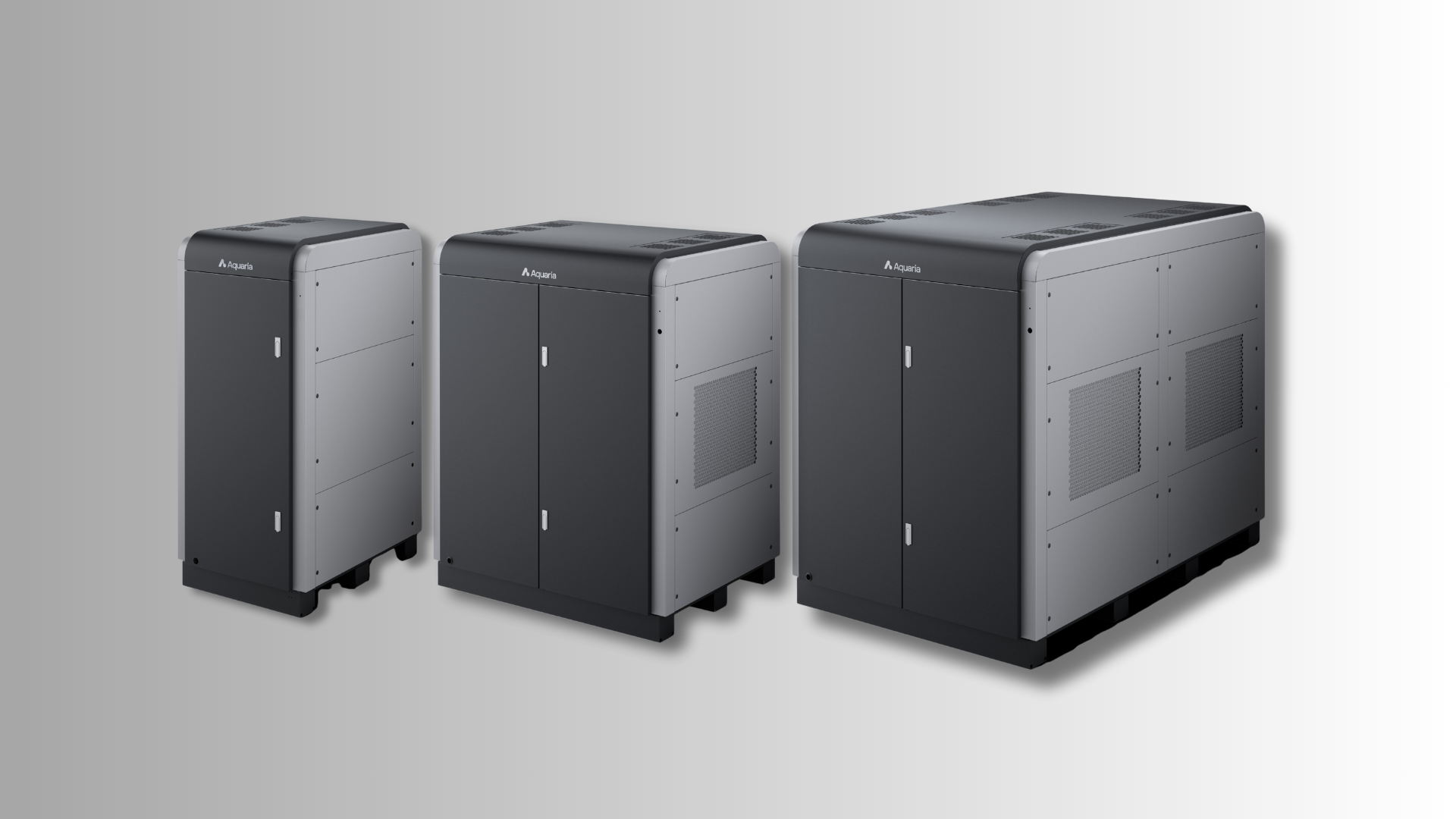
Aquaria’s Hydropack machine produces 66 to 264 gallons per day depending on the model (Hydropack S, Hydropack, or Hydropack X), operates down to 30% relative humidity, and connects to your existing plumbing through a storage tank that buffers production across humidity swings. In independent lab testing by Microbac Laboratories, Pace Analytical, and EMSL Analytical, Hydropack water tested non-detect or below EPA maximum contaminant levels for 100+ substances, including PFAS and microplastics. It is the option most well drillers will not bring up when they quote you a new well, because they do not sell it.
How Does the Cost Actually Compare?
The Hydropack S starts at $13,999 MSRP, or $137/month with $0 down and fixed rates as low as 7.99% on Aquaria’s consumer financing. The Hydropack and Hydropack X run $207 and $330 per month respectively. Installation runs $10,000 to $25,000 and can be rolled into financing.
For a homeowner being quoted to drill a new well, the comparison is straightforward. One of our system owners, Brian S., a Hill Country homeowner who installed a Hydropack instead, put it: “I didn’t want to put out $70,000 to drill a well when I could get into something like Aquaria.” Watch his story here.
When Is a Hydropack Not the Right Answer?
It is not for everyone. If your geology is straightforward and a new well runs $5,000 to $10,000 with high confidence of hitting water, drilling is probably the right call.
If your humidity stays below 30% relative humidity for most of the year (parts of the high desert), production drops sharply, and an AWG should be paired with significant storage or another source. Aquaria’s data on Texas Hill Country production, for example, shows 2 to 3 months of winter operation at 28% to 40% of rated capacity. That is why we recommend pairing every Hydropack with an external storage tank that buffers production across humidity swings. Reach out to our Water Experts to have a detailed setup quote based on your location.
Frequently Asked Questions
How long does a residential well typically last?
Most residential wells are built to last 20 to 30 years, per the Water Systems Council’s wellcare program. Pumps inside the well last 8 to 12 years before they need replacement. A well that runs dry early is usually a water-table problem, not a well-construction problem.
Can I just pour bottled water or hauled water down the well?
No. The Maine Drinking Water Program, quoted in Central Maine (October 2025), is explicit: water poured down a dry residential well dissipates back into the aquifer within a day or two, can contaminate your drinking source through whatever the tank or hose touches, and may damage the borehole. Store the hauled water in a cistern or tank that connects to your home plumbing instead.
How much does it cost to drill a new residential well?
National averages run $5,000 to $25,000 depending on the depth and geology. In difficult geology, including parts of Central Texas, Hawaii, and coastal Florida, real-world quotes regularly run $40,000 to $100,000 or more, with no guarantee of hitting water at any price.
How much water does an atmospheric water generator actually produce?
Aquaria’s Hydropack systems produce 66 to 264 gallons per day at rated conditions, depending on the model. Output scales with humidity and temperature: at 60% relative humidity and 86°F, expect roughly 85% of rated capacity; below 30% relative humidity, production drops sharply. Pair every system with an external storage tank that smooths production across daily and seasonal swings.
How quickly can a Hydropack be installed?
Residential installation takes approximately one week from delivery to operation, compared to 4 to 12 weeks for a new well drill from contract to first water. Aquaria offers full-service installation in Texas and Florida, and works with certified electricians and contractors in other markets.
Subscribe to our Newsletter
Get the latest updates, news and insights directly to your inbox
No payments for 6 months on any Hydropack. Get your Hydropixel delivered free in the continental US.
Get Your Free Water Plan
Two quick steps. We'll send the right system size, expected output for your climate, and exact pricing — usually within one business day.