
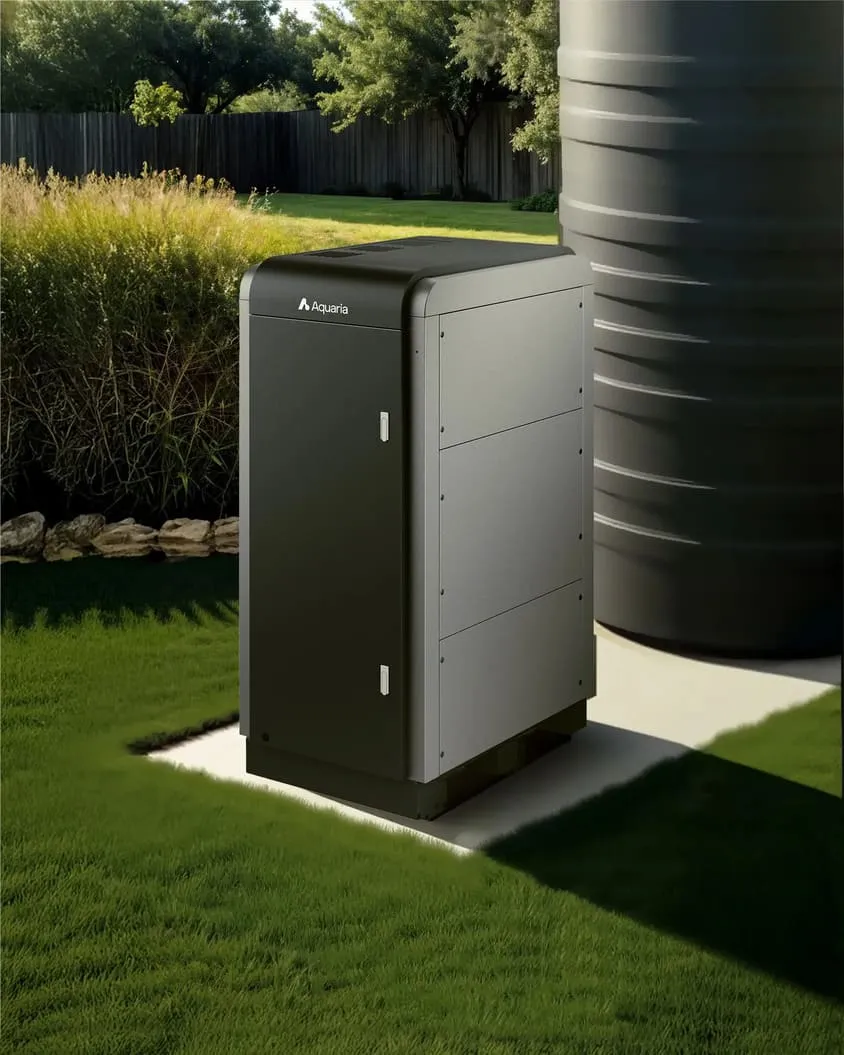
TL;DR — Atmospheric water generators pull humidity out of the air, condense it, filter it, and pipe it into your home. Aquaria's residential lineup spans 66 to 264 gallons per day across the Hydropack S, Hydropack, and Hydropack X — enough to cover full household demand for most U.S. homes. AWG works best in humid climates (Gulf Coast, Southeast, Texas coast, Pacific Northwest) and for homes facing drought-stressed municipal supply, failing wells, or completing a solar-plus-battery setup.
There's roughly 13,000 cubic kilometers of water suspended in the air around us — about seven times the volume of every river on Earth combined. Atmospheric water generators (AWGs) are built to capture a small fraction of it, condense it into liquid water, filter it, and pipe it into a home.
Here's what that actually looks like.
The two methods air water generators use to extract water
Condensation. The most common approach. Humid air is drawn into the unit and cooled below its dew point — the same way a cold glass sweats on a summer day. The water that forms is collected, filtered, and stored. Condensation-based AWGs perform best above ~30% relative humidity, which covers most of the U.S. South, Southeast, Texas coast, and Pacific Northwest.
Adsorption. A less common method designed for dry climates. The unit uses engineered materials that pull water molecules directly out of low-humidity air. It works in places condensation can't, but typically produces less water per unit of energy.
Aquaria's residential air water generators use condensation, optimized for the humidity ranges most American homeowners actually live in.
What an atmospheric water generator produces at home
A Hydropack X produces up to 264 gallons of water per day; enough to cover full household demand for most U.S. homes. (The EPA estimates the average American uses 80 to 100 gallons per day.) Smaller homes can run the Hydropack at 132 gal/day, or the Hydropack S at 66 gal/day.
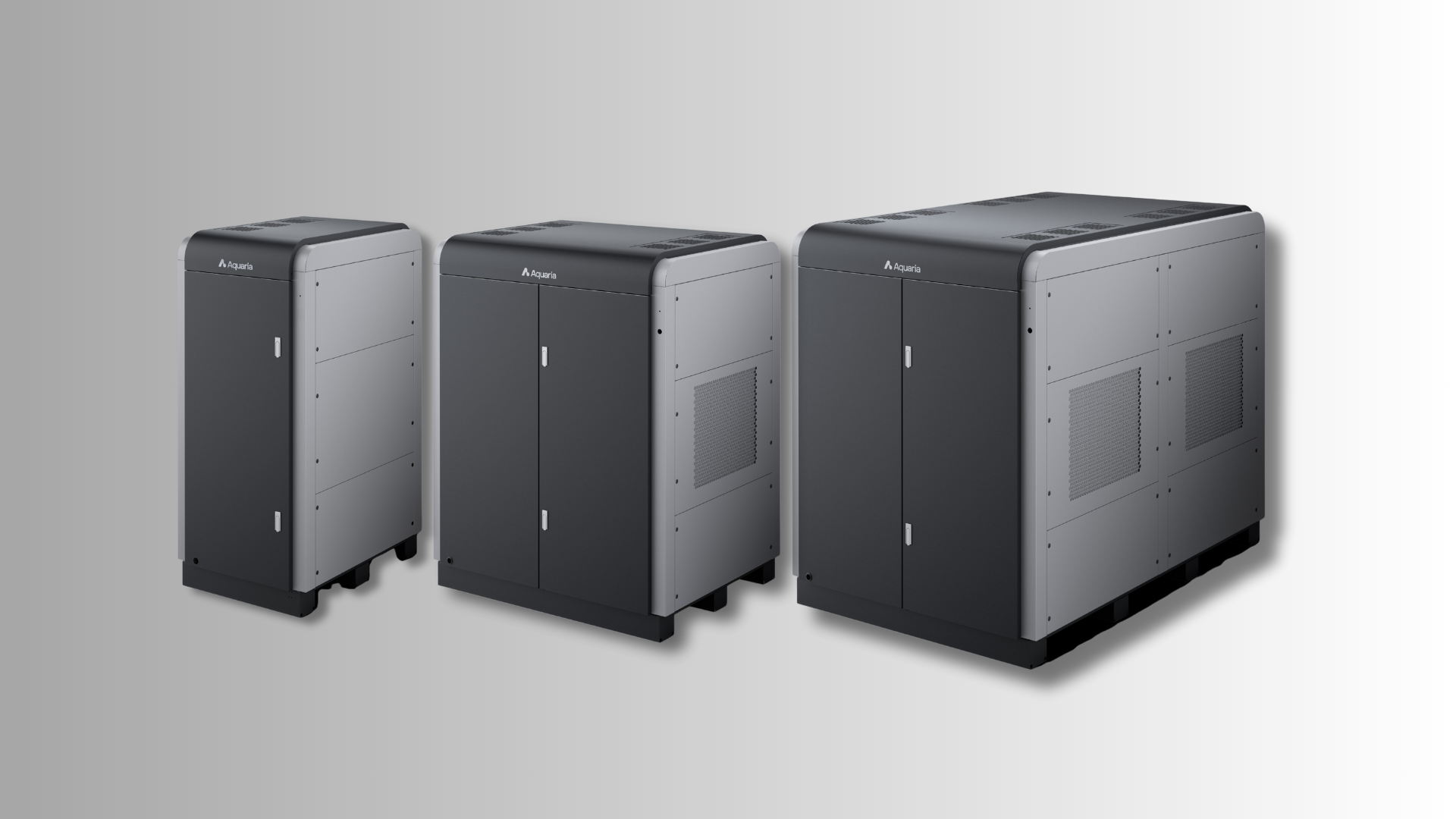
All three connect to standard household plumbing, pair with an external storage tank, and install in days without plumbing permits in most jurisdictions.
The water runs through air pre-filtration, multi-stage purification (ultrafiltration and activated carbon), and a UV disinfection cycle every four to eight hours. In independent lab testing, Hydropack water has tested non-detect for lead, arsenic, nitrates, PFAS, microplastics, E. coli, and total coliform — across more than 50 contaminants screened.
Pairing AWG with solar
A Hydropack runs on standard household electricity. The cleaner setup is solar. If you already have rooftop solar and a battery system, adding AWG closes the loop on infrastructure independence: power from the sun, water from the air, and a household that no longer depends entirely on the grid or a municipal system to function.
When AWG actually makes sense
Atmospheric water generation isn't the right answer for every home. It works best when:
- You're in a humid climate (Gulf Coast, Southeast, Texas coast, Pacific Northwest)
- Your municipal system is under stress — drought restrictions, rising rates, frequent boil notices
- You're on a well that's failing, contaminated, or going dry
- You already have solar and want a parallel water source
If that describes your situation, the next step is a quick conversation with an Aquaria Water Expert. They'll size the right system for your home, your climate, and your household demand.
Subscribe to our Newsletter
Get the latest updates, news and insights directly to your inbox
No payments for 6 months on any Hydropack. Get your Hydropixel delivered free in the continental US.
Get Your Free Water Plan
Two quick steps. We'll send the right system size, expected output for your climate, and exact pricing — usually within one business day.