
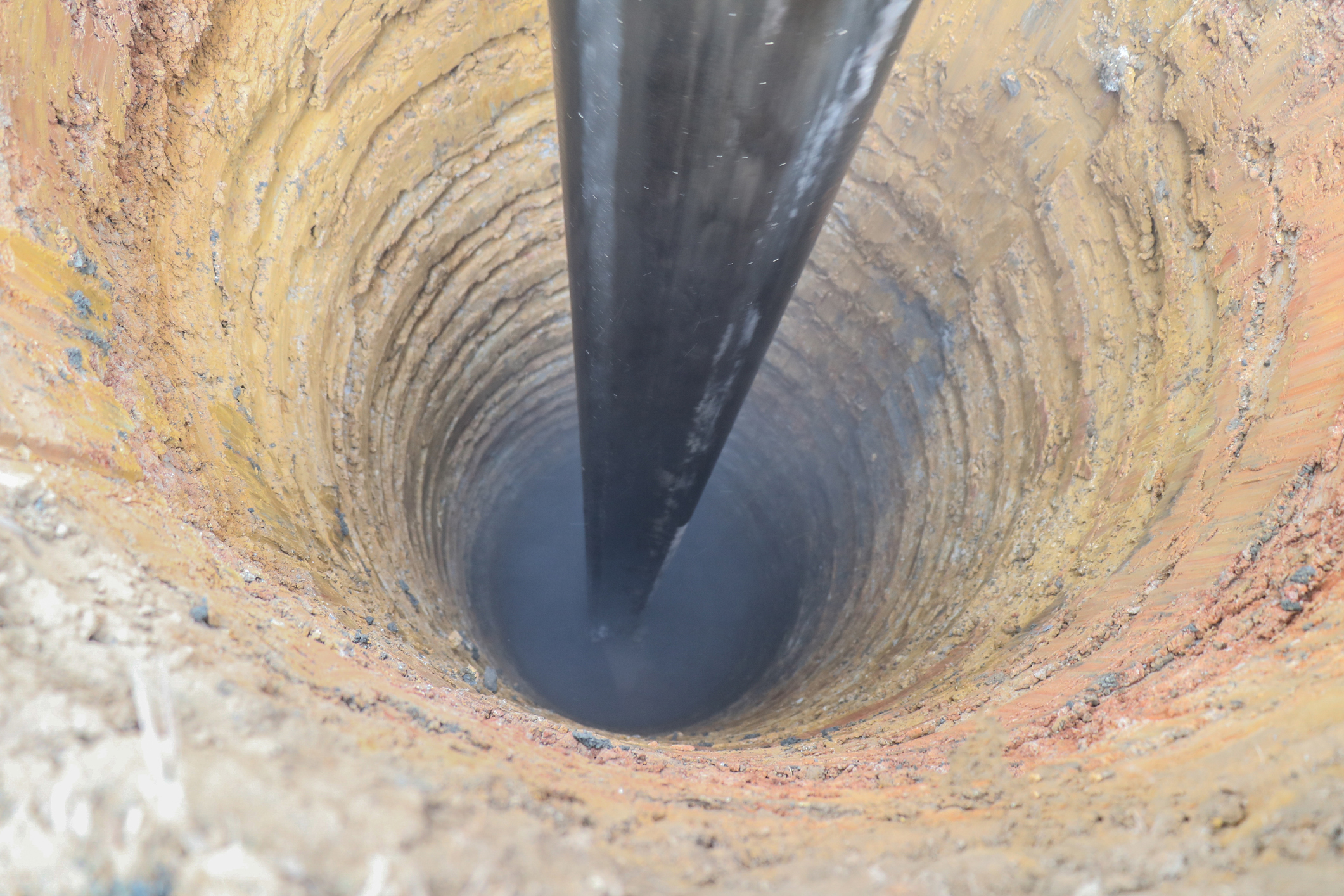
(Why water is the biggest hidden cost in buying or upgrading a home)
Most homeowners assume water is straightforward. If municipal supply isn’t reliable, or if you’re buying land outside city limits, you drill a well. Problem solved.
In reality, water is often the single biggest hidden financial risk homeowners face. And wells are where budgets quietly break.
If you’re already researching alternative water sources, this guide isn’t about listing options. It’s about avoiding a costly mistake before you commit tens of thousands of dollars.
Before committing tens of thousands of dollars to a drilling project, follow these steps to assess your financial risk and water reliability:
- Access public well logs. Most U.S. states publish data through geological surveys. In Texas, use the Texas Water Development Board (TWDB) website to search by address or map.
- Analyze neighboring data. Look at the two or three closest wells to your property for the most accurate insight into likely depth and water yield, as local geology varies wildly.
- Review historical yield (GPM). Check the "yield" on nearby logs. While 1–2 GPM is slow, aim for a minimum of 3.5–6 GPM for standard household supply.
- Calculate estimated depth costs. At $25–$65 per foot, a 600–800 foot well can exceed $15,000–$50,000 before adding pumps or treatment systems.
- Evaluate long-term reliability. Well logs only show initial findings; they cannot predict yield declines due to drought cycles or degrading water quality over time.
The Assumption That Gets Homeowners in Trouble
“Just drill a well” sounds simple until the numbers show up.
Well depth, water yield, and long-term reliability vary wildly, even between neighboring parcels. Many homeowners don’t realize this until after they’ve purchased land or started construction, when changing course becomes expensive.
The good news is: much of this risk is visible before you make an offer, if you know where to look.
The 5-Minute Well Reality Check (That Can Save You up to ~$80k)
Before committing to a well, there’s a quick due-diligence step many homeowners skip.
Check public well logs
Most U.S. states publish public well log data through geological surveys or water resources agencies. If you live in Texas, you can access via Texas Water Development Board (TWDB) website. These online records can usually be searched by address or map and show how deep nearby wells were drilled, where water was found, and how much they produce, making it possible to do basic water due diligence before committing to a project.
Look at neighboring wells
Looking at the closest two or three wells offers the most accurate insight into how deep a new well is likely to be and how much water it may produce. Local geology matters far more than county-wide averages, which is why nearby well data is typically the most reliable, though results can still vary if records are limited or outdated.
Drilling cost estimates
The commonly cited $50-per-foot estimate can be misleading. As of 2025, residential well installation costs, including drilling and casing, typically range from $25 to $65 per foot. For deeper wells in the 600–800 foot range, total costs often exceed $15,000 to $50,000 before factoring in pumps, storage, or water treatment. Actual pricing varies widely based on depth and local geology, which is why obtaining site-specific quotes is essential.
Check the flow rate (GPM).
A yield of 1–2 gallons per minute (GPM), roughly comparable to a slow garden hose, falls short for most household needs like showers, laundry, or running multiple faucets at once. Wells at this level often require additional cisterns or booster pumps just to function reliably. In practice, 3.5–6 GPM is considered the minimum for basic household supply, while 6–12 GPM supports typical daily use without extra equipment. You can verify this by checking public well logs for “yield” or “flow rate” data on nearby wells.
In Texas, this due diligence has become critical. Groundwater levels in major aquifers are under sustained pressure, and drilling outcomes are far less predictable than they once were. Homeowners increasingly report deeper wells, declining yields, and higher treatment requirements over time.
At the same time, while Texas has approved historic funding for water infrastructure, those investments are spread over decades. For homeowners, that means today’s water problems won’t be solved by tomorrow’s pipeline.
A Texas Homeowner Example: Why Brian Walked Away From a Well
When Brian S. explored drilling a well for his property, estimates came back in the $60,000–$80,000 range, with no guarantee of long-term yield or water quality. Even after spending that amount, the well could still decline or require additional treatment.
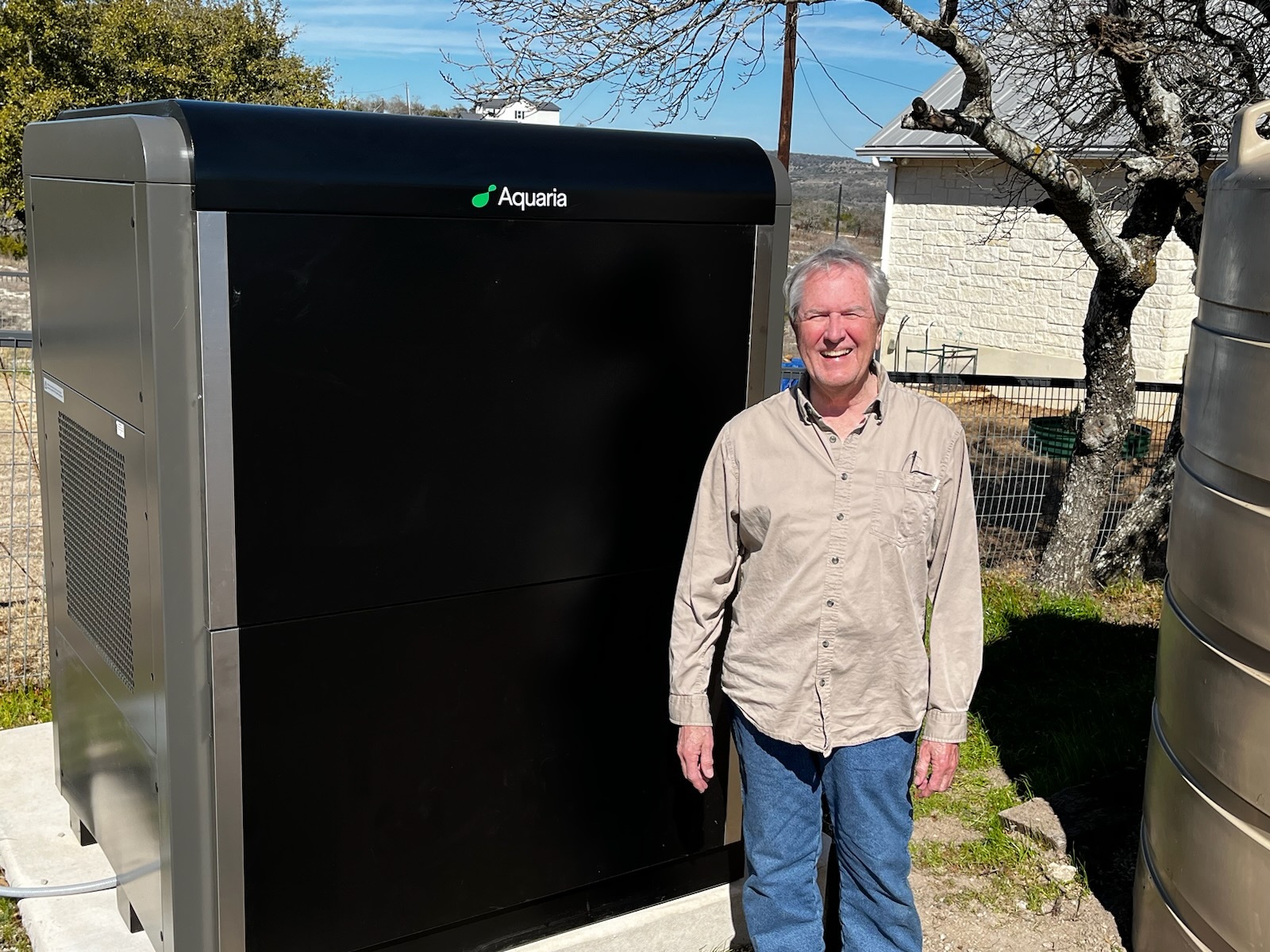
Rather than tying his water supply to an aquifer he couldn’t control, he chose a different approach: installing an atmospheric water generator, Aquaria Hydropack, to secure drinking water without betting on groundwater performance. His decision reflects a growing shift among homeowners who want predictable outcomes.
What Well Logs Can’t Tell You
Well logs are valuable, but they only answer part of the question. They can tell you how deep others drilled and what water they initially found. But, they can’t tell you how yields will change over time, how quality will degrade, how future drilling costs will rise, or how drought cycles will affect reliability.
That’s the gap most homeowners run into: even with perfect due diligence, wells remain structurally uncertain.
The Alternative: Atmospheric Water Generators (AWGs)
Atmospheric water generators (AWGs) take a fundamentally different approach: they produce drinking water on-site, from the air, without depending on aquifers, rainfall, or delivery schedules.
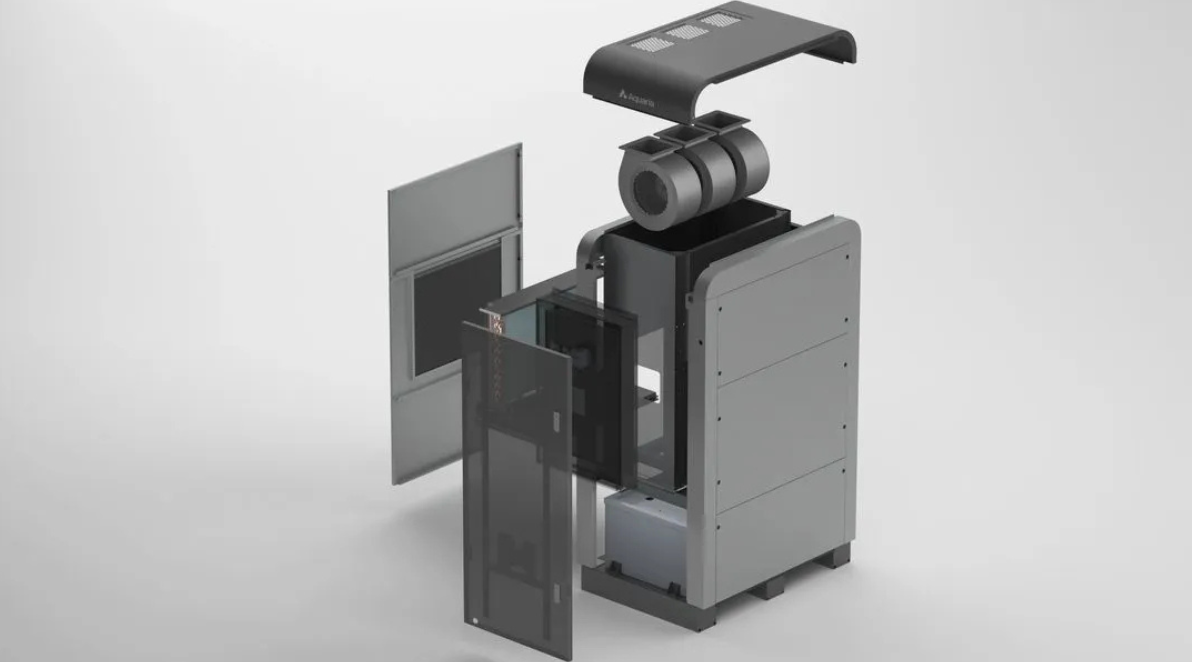
Using Aquaria’s systems as an example, an AWG works by pulling in ambient air, condensing the moisture it contains, and purifying that water to drinking standards before storing it for daily use. The result isn’t speculative yield—it’s measurable, daily output that can be sized to match a household’s needs. Depending on the setup, systems can operate on grid power or be paired with solar and batteries for added resilience.
The question isn’t, “Is an AWG cheaper than a well?”
It’s “Which option lets you know—up front—what you’re getting?”
With wells, homeowners face unknown depth, unknown yield, and unknown longevity, even after spending tens of thousands of dollars. With an atmospheric water generator, capacity, output, and installation costs are defined from the start.
If you want a reliable alternative water source without betting on geology or infrastructure timelines, predictability is exactly the point.
Do the Math Before You Commit
If you’re already researching alternative water sources, you’re likely at a point where assumptions can become expensive. Start by running the well-log check and understanding the true, all-in cost of drilling. Then weigh that risk against a system designed to produce water predictably, without relying on geology or long infrastructure timelines.
Request a quote to see whether an atmospheric water generator makes more financial sense for your home before committing to a well.
Subscribe to our Newsletter
Get the latest updates, news and insights directly to your inbox
No payments for 6 months on any Hydropack. Get your Hydropixel delivered free in the continental US.
Get Your Free Water Plan
Two quick steps. We'll send the right system size, expected output for your climate, and exact pricing — usually within one business day.