
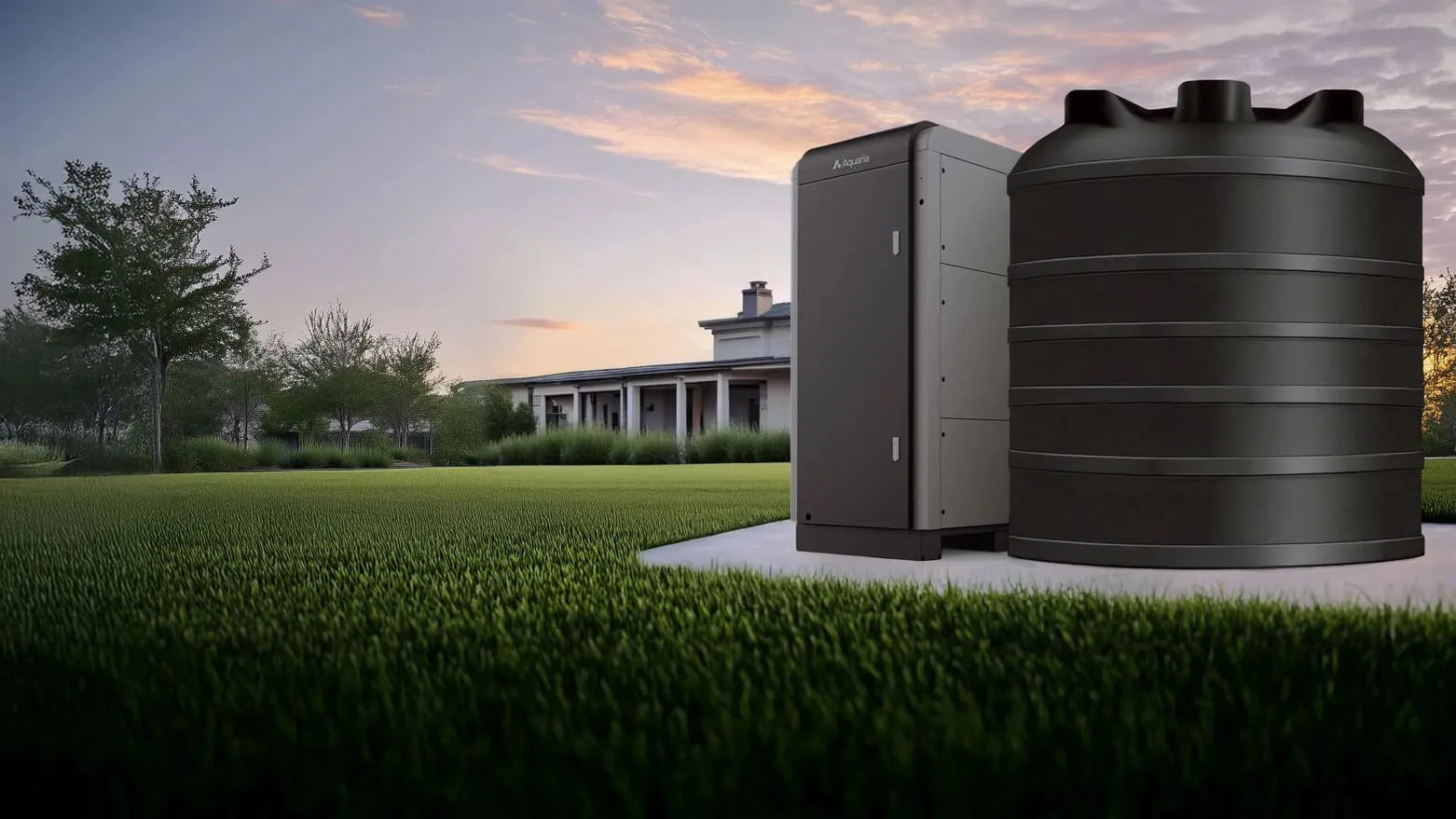
TL;DR — Off-grid homes rely on wells, rainwater, trucked deliveries, or atmospheric water generation — each with its own water-quality risk. Wells carry arsenic, nitrate, and PFAS exposure depending on geology. Rainwater carries roofing-material and microbial contamination. Deliveries carry supply and price volatility. Atmospheric water generation (AWG) sidesteps all of it because the source is the air, not the ground, the roof, or a delivery route. Here's how to figure out which combination fits your home.
Going off-grid for water is a real choice with real trade-offs. The previous version, pull from a well, store in a tank, done, collapses the first time the well tests positive for arsenic, the cistern grows algae, or the dry season runs longer than the storage.
The fix isn't to give up on off-grid water. It's to design around the failure modes specific to each source.
The four off-grid water sources, and where each fails
Wells (groundwater)
The default for most rural homes. A well can be reliable for decades, then suddenly isn't, the aquifer drops, the casing fails, or neighboring agricultural pumping changes the chemistry. Common quality issues by region: arsenic (Southwest, parts of Texas), nitrates (agricultural belts), PFAS (increasingly everywhere), iron and manganese (Midwest), high TDS and salinity (coastal Texas). A well that tested clean five years ago is not necessarily clean today.
Rainwater harvesting
Works best in genuinely wet climates. Water quality is determined entirely by the roof surface, the gutters, and the storage tank. Bird droppings, asphalt-shingle leachate, lead flashing, and airborne pollutants all end up in the cistern. Strong in wet years; weak in droughts — which is the scenario most homeowners are planning around in the first place.
Trucked water deliveries
Zero infrastructure cost upfront. Roughly $300–$800/month in normal conditions; price spikes and supply rationing show up during regional drought. The water itself is usually fine. The risks are availability and cost, not contamination.
Atmospheric water generation (AWG)
Pulls humidity from the air, condenses it, filters it, and stores it. The source is the atmosphere, not a roof, a well, or a delivery route. Works best above ~30% relative humidity (coastal, Southeast, Pacific Northwest, much of Texas). Independent of aquifer depletion, drought restrictions, and supply chains.
How to think about your setup
There's no single best off-grid water system. There's the one that fits your geography, climate, and household demand.
A useful framework:
- Test what you have. Send a well sample to a certified lab, not a DIY strip. Test for arsenic, nitrates, PFAS, lead, and the heavy metals known to your region. Re-test every 1–2 years.
- Match the source to the failure mode you most want to avoid. If your well is shaky, AWG or deliveries become the resilience layer. If you live somewhere genuinely dry, rainwater is the wrong primary source. If you're worried about contamination, AWG produces water with no source-water risk to filter out.
- Layer, don't single-source. The most resilient off-grid homes run two sources: one primary, one backup. Single-source homes are the ones that get caught.
Where atmospheric water generator (AWG) fits
For a growing share of off-grid homeowners, AWG has moved from "interesting backup" to primary source. The Hydropack family covers the full range of household sizes:
- Hydropack S — 66 gal/day, for small households or as a backup layer
- Hydropack — 132 gal/day, for medium households
- Hydropack X — 264 gal/day, full household demand
All three install in days, with no plumbing permits required in most jurisdictions. They connect to standard household plumbing, pair with an external storage tank, and run on either grid power or solar.
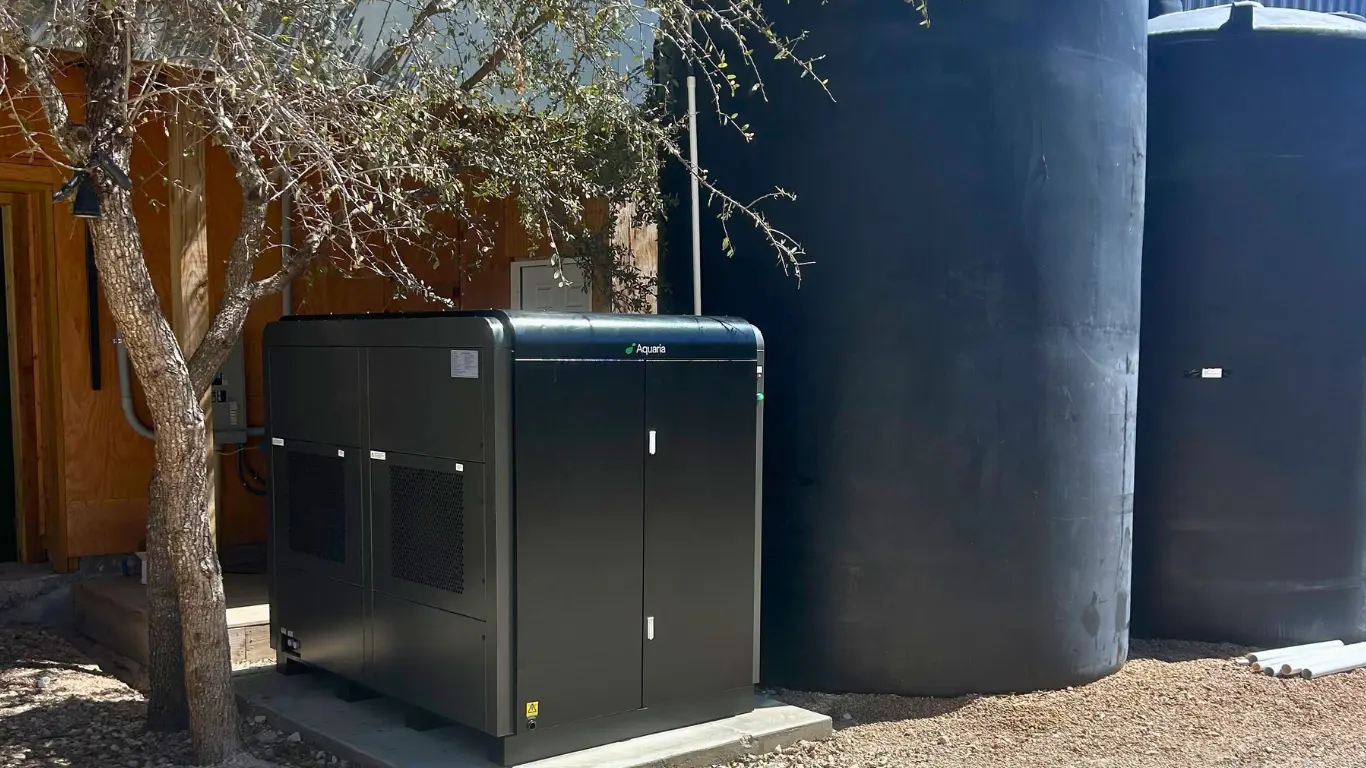
In independent lab testing, Hydropack water has tested non-detect for lead, arsenic, nitrates, PFAS, microplastics, E. coli, and total coliform — across more than 50 contaminants screened. Well, rainwater, and delivery sources can't match that consistently, because each is tied to a source water that may or may not be clean on a given day.
What to do next
If you already have a well or rainwater system, start with current lab testing; you can't fix a problem you haven't measured. If you're planning an off-grid build from scratch, talk through your geography, climate, and household demand with someone who can size the system properly.
Get started today, and receive a personalized off-grid water quote based on your location and water needs.
Subscribe to our Newsletter
Get the latest updates, news and insights directly to your inbox
No payments for 6 months on any Hydropack. Get your Hydropixel delivered free in the continental US.
Get Your Free Water Plan
Two quick steps. We'll send the right system size, expected output for your climate, and exact pricing — usually within one business day.