

TL;DR: A water from air machine, also called an atmospheric water generator, or AWG, pulls humidity out of the air, condenses it into liquid, and filters it into clean drinking water. Residential systems typically produce 1 to 264 gallons per day depending on size and humidity. They make the most sense as a backup or supplemental water source for homeowners dealing with failing wells, fragile municipal infrastructure, or contamination concerns, not as a replacement for cheap, reliable tap water.
A water from air machine is a household appliance that captures humidity from the surrounding air, condenses it into liquid water, and runs that water through filtration and disinfection to make it safe to drink. The category is also called atmospheric water generation, or AWG. Think of it as the water equivalent of a home solar system: instead of pulling power from the grid, it pulls water from the atmosphere.
That basic idea has been around for decades, mostly in commercial and industrial settings.
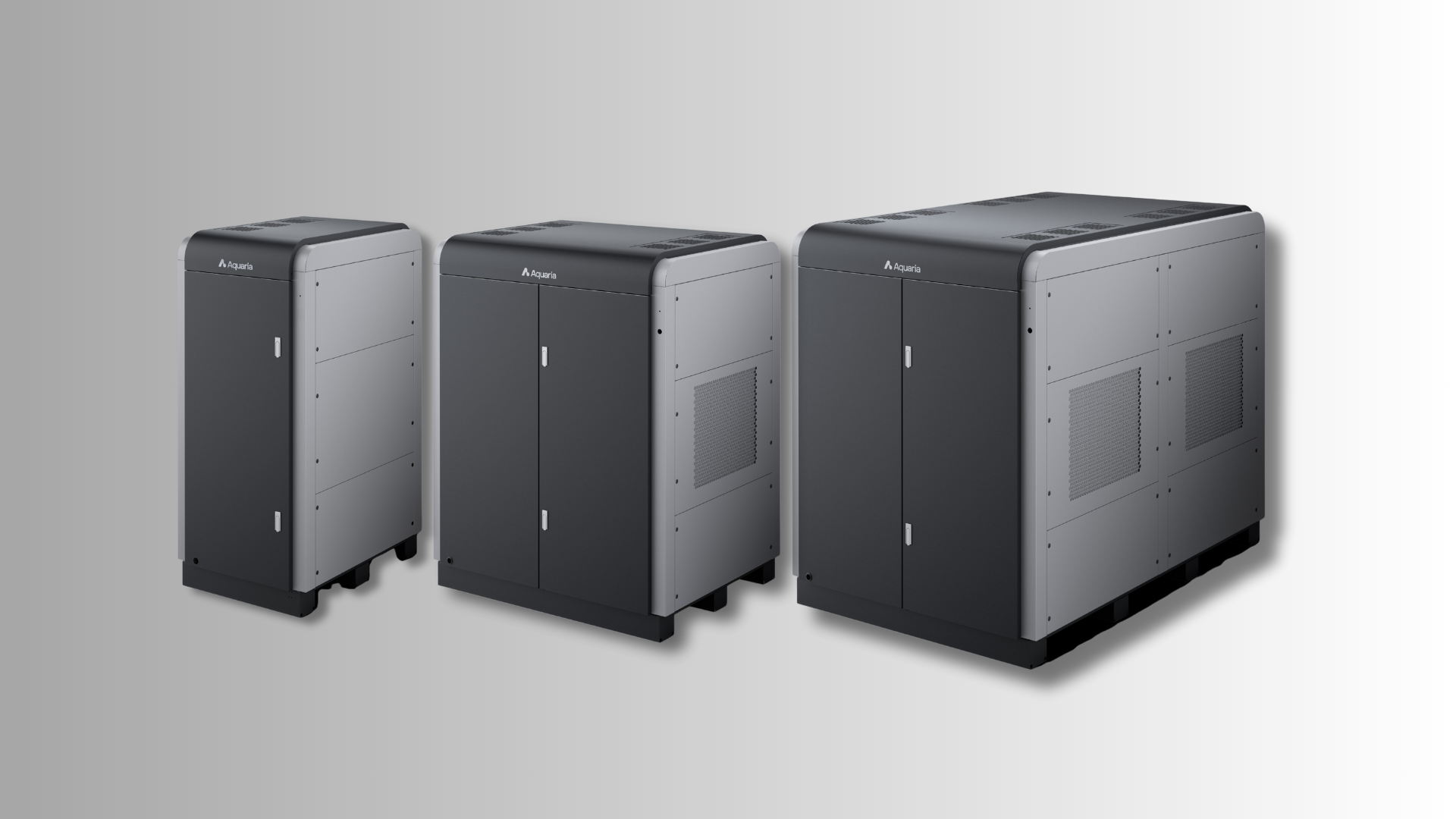
What's changed in the last few years is residential. Aquaria, headquartered in Texas, builds Hydropack systems that connect directly into a home's plumbing and produce 66 to 264 gallons of clean water per day from ambient humidity, enough to supplement or, in some cases, replace a conventional water source for a household.
If you've started searching for a water from air machine, this guide answers the practical questions in plain language: how the technology actually works, how much water it produces, what it costs, whether the water is safe, and, honestly, where it makes sense and where it doesn't.
What is a water from air machine?
A water from air machine, or atmospheric water generator (AWG), is a machine that produces drinking water by extracting humidity from ambient air. It is not a filter for existing water and not a dehumidifier. It's a self-contained water source.
Most residential AWGs share four core components: a fan and air intake, a cooling system that condenses moisture into liquid, a multi-stage filtration and disinfection stack, and a storage tank. The output is bottled-water-grade drinking water with no plumbing connection to a well or municipal supply required.
The category covers a wide range of sizes:
- Countertop units produce roughly 1 to 10 gallons per day and act as a smarter water cooler.
- Residential whole-home systems, like Aquaria's Hydropack line, produce 66 to 264 gallons per day and tie into existing house plumbing.
- Commercial and community-scale systems can produce thousands of gallons per day for offices, schools, hospitals, or villages.
When most homeowners search for a "water from air machine," they're usually weighing the second category, something that does enough work to matter for a household, not a novelty appliance.
How does an atmospheric water generator actually work?
An atmospheric water generator works in four basic steps: it pulls air in, cools it below its dew point so moisture condenses into water, captures that water, filters and disinfects it, and stores it for use. It works just like the water dripping off your AC on a humid summer day: humid air meets a cold surface, and the moisture condenses out.
Here's what happens inside a Hydropack, step by step:
- Air intake. A pre-filter screens out dust, pollen, and larger particulates as ambient air is drawn into the unit.
- Condensation. A refrigeration coil cools the incoming air below its dew point. Moisture in the air condenses into liquid water on the coil. Same physics as condensation forming on a cold drink.
- Internal collection. Condensed water drips into a sealed internal reservoir. It does not sit exposed to ambient air after this point.
- Ultrafiltration and activated carbon. The water passes through ultrafiltration to remove any remaining particulate matter and through activated carbon to capture volatile organic compounds and improve taste.
- UV disinfection. Every four to eight hours, ultraviolet light cycles through the storage water to neutralize any biological contaminants. There is no chlorine, no chloramines, and no chemical treatment.
- External storage and delivery. Finished water is pushed to an external storage tank or directly into the home's plumbing for use at the tap.
The whole process is closed-loop and chemical-free, which matters for the next question most people ask.
How much water can AWG really produce?
Real-world output depends on two things: the size of the machine and the humidity and temperature where it's running. A unit that produces 132 gallons per day in coastal Florida might produce 50 in inland Texas in winter and near zero in the high desert.
A few honest reference points:
For Aquaria's Hydropack lineup specifically: the Hydropack S produces up to 66 gallons per day, the Hydropack up to 132, and the Hydropack X up to 264. Those are peak figures, hit at roughly 86°F and 80% relative humidity. In a typical Houston summer, output runs near rated capacity. In a typical Hill Country Texas winter, with cold mornings and low humidity, you might see 30–40% of rated capacity for two to three months.
That seasonality is the single most under-discussed fact in the category. Vendors quote nameplate output. Reality is a curve that follows your local humidity and temperature. Any responsible AWG installation pairs the machine with a storage tank, typically several hundred to several thousand gallons, that fills during high-humidity stretches and buffers the household through dry or cold periods.
The minimum operating threshold for Hydropack systems is roughly 30% relative humidity. Below that, production drops to near zero. Above that, you can model fairly well based on your local climate data. That makes humid Gulf Coast and Atlantic markets the strongest fit, and arid desert markets the weakest.
How much does a water from air machine cost?
Pricing scales with output. A countertop unit runs $1,000 to $4,000. Residential whole-home systems run roughly $14,000 to $35,000 for the machine itself, with installation typically adding another $10,000 to $25,000 depending on trenching, electrical work, and storage tank size. Commercial systems run from $20,000 into the six figures.
The Hydropack S starts at $13,999 (roughly $137 per month with $0-down financing), the Hydropack at $22,499 ($207 per month), and the Hydropack X at $34,999 ($330 per month). Installation can be rolled into the same financing.
Two ongoing costs matter:
- Filters. Most residential AWGs use replaceable filter sets every four to six months. For Hydropack systems, that's $200–$400 per year, depending on the model.
- Electricity. Aquaria's Hydropack and Hydropack X run at about 0.93 kWh per gallon of water produced; the Hydropack S is slightly higher at about 1.09 kWh per gallon. For a typical household using 25 gallons per day for drinking and cooking, that translates to roughly $45–$70 per month of electricity in Houston, and more in higher-rate markets like California or Hawaii. Solar offsets this dramatically when you have it.
Headline cost numbers can sound high in isolation. They look very different when you anchor them against the actual alternative a household is weighing, a topic worth its own section below.
Is the water actually clean? What gets filtered out?
In independent third-party lab testing, water from Aquaria Hydropack systems has measured cleaner than virtually all bottled and tap water across more than 100 contaminants. That includes the contaminants most homeowners are worried about today: PFAS, microplastics, lead, arsenic, and bacteria. Three separate labs, Microbac Laboratories, Pace Analytical, and EMSL Analytical, tested samples drawn from a Hydropack in Austin, Texas during 2025.
A few specific results from those reports:
- PFAS. Pace Analytical tested 14 PFAS compounds using EPA Method 537.1, including PFOA and PFOS. All 14 returned non-detect. The U.S. Environmental Protection Agency, in its Per- and Polyfluoroalkyl Substances (PFAS) Final Rule issued in April 2024, set enforceable limits at 4 parts per trillion for PFOA and PFOS, the strictest drinking water standard ever set in the United States. A growing number of public water systems are exceeding those new limits.
- Microplastics. EMSL Analytical tested six size classes of microplastics using fluorescence microscopy, from particles smaller than 10 micrometers up to 5,000 micrometers. All six returned non-detect.
- Lead, arsenic, nitrates, bacteria. Microbac Laboratories tested for over 100 analytes. Lead, arsenic, nitrates, E. coli, total coliform, fluoride, chloride, and iron all returned non-detect. Total dissolved solids measured 4.54 mg/L. The U.S. Environmental Protection Agency's Secondary Drinking Water Standards: Guidance for Nuisance Chemicals sets a recommended TDS ceiling of 500 mg/L; typical municipal tap water runs 200–400.
A note on framing: those are results from specific tested samples at specific points in time. They aren't a guarantee that every drop of water produced by every AWG everywhere will look identical (air composition varies). They do show that when an AWG is engineered well, the output is among the cleanest residential drinking water available, in part because the source (atmospheric humidity) never touches groundwater contaminants, lead pipes, or plastic bottles in the first place.
Where do AWGs make sense, and where don't they fit?
A water from air machine makes sense when reliable, clean water is genuinely hard to get from your existing infrastructure, or when you've decided the resilience of having an independent source is worth the cost. It does not make sense as a replacement for cheap, clean municipal tap water.
That's an unusual sentence to read on a page about AWGs, but it's the honest framing. If you have safe city water and a working filter under your sink, an AWG is overkill. The category is built for people whose water situation is more complicated than that.
Where AWGs do make sense, ranked by how often we see homeowners actually buying:
- Failing or expensive wells. Drilling a new well in difficult geology can run $40,000 to $100,000-plus with no guarantee of hitting water. Dry wells, declining output, and aquifer depletion are widespread in parts of Texas, California's Central Valley, and rural Florida. Replacing the well with an AWG can come in at or below the well quote, with no drilling risk.
- Coastal saltwater intrusion. Coastal wells from the Florida Gulf Coast through Mendocino, California are increasingly producing brackish water as seawater intrudes into freshwater aquifers. Reverse osmosis can keep up at low demand, but multi-bathroom households, irrigation, and pools quickly outpace what RO can deliver. AWG bypasses the ground entirely.
- PFAS or contamination concerns. A growing list of municipal water systems and private wells are testing above the U.S. EPA's 2024 PFAS limits. Standard filter pitchers can't fully address that. AWG produces water that never contacted contaminated groundwater in the first place.
- Resilience and backup planning. For homeowners in hurricane zones, winter-storm zones, or aging-infrastructure areas, a water from air machine plays the same role for water that a Generac plays for power: a reliable backup that works when the central system doesn't.
- Off-grid and solar-plus-battery setups. Homeowners who already generate their own electricity often see water as the next piece of the same self-sufficiency stack. Aquaria systems can schedule production to align with solar availability so the surplus you'd otherwise export to the grid produces water instead.
Where AWGs don't make sense:
- Persistently dry climates. Below roughly 30% relative humidity for most of the year, think El Paso, Phoenix, much of Nevada and inland Arizona, output collapses. There are emerging adsorption-based AWG technologies designed for those conditions, but most current residential systems are condensation-based and won't produce meaningfully there.
- Households with cheap, clean municipal water and no resilience concern. A countertop carbon filter is a better answer.
- Buyers who can't accommodate the install. Whole-home AWGs need 220V electrical, drainage, and outdoor or garage placement. If those aren't available, a smaller dispenser unit may be the only viable option.
How does an AWG compare to a well, RO, or bottled water?
AWG is one of four real water options most U.S. homeowners are weighing: a private well, whole-home reverse osmosis, bottled water delivery, or an atmospheric water generator. Each solves a different problem, and they're often combined in practice. Here's how they line up.
The honest takeaway: filtration (RO, carbon, UV) treats whatever water already exists. AWG produces new water from a source you don't have to share with anyone or anything else. Those aren't competing products; they're solving different parts of the problem. Plenty of households with municipal water and an under-sink RO add an AWG specifically for resilience, and plenty of well owners use AWG to bypass a contaminated aquifer while keeping the well for irrigation.
Can you run a water from air machine on solar?
Yes. For solar-and-battery homeowners, AWG is one of the most natural ways to put excess generation to work. Aquaria's Hydropack systems integrate with solar through scheduling software that aligns water production with peak sun hours or surplus battery capacity, so you produce water with energy you already paid for.
This pairing matters most in two situations: off-grid properties where there's no utility water and electricity comes from the panels, and grid-tied solar homes where net metering changes have reduced the value of exported energy. In both cases, the underlying logic is the same: turn surplus electricity into stored, drinkable water. For a longer breakdown, see our piece on how solar owners can become water and energy independent.
The mental model is the same one that's worked for decades in solar: the sun is a resource you already have. So is the humidity in your air. A water from air machine is the equivalent of a solar panel for water, and the storage tank plays the role of the battery, holding production from good days for use on dry ones.
What's a reasonable next step?
If you've read this far, you probably aren't looking for a novelty gadget. You're trying to figure out whether a water from air machine actually fits your situation. That's a question with real variables: your local humidity profile, what your current water source is doing, whether you have solar, what your household actually uses. The honest answer for most people requires a 15-minute conversation with someone who can run those numbers against your property. We'd rather help you decide it's not a fit and save you the spend than sell you the wrong system. Compare Hydropack models and specs to see where each one lands, or read our deeper Definitive Guide to Atmospheric Water Generators for the full technical picture.
Frequently asked questions
Is water from air safe to drink?
Yes. In independent lab testing by Microbac Laboratories, Pace Analytical, and EMSL Analytical, water from Aquaria Hydropack systems tested non-detect across PFAS, microplastics, lead, arsenic, nitrates, and bacteria, with results below U.S. EPA maximum contaminant levels on every measured analyte. Total dissolved solids measured 4.54 mg/L versus a 200–400 mg/L typical tap water range. For a deeper breakdown of the science and regulatory context, see Is Water From Air Safe to Drink?
Does an atmospheric water generator work in dry climates?
It depends. Condensation-based AWGs like Aquaria's Hydropack systems operate down to roughly 30% relative humidity, with output dropping sharply below that threshold. Coastal markets, the Gulf Coast, the Atlantic seaboard, Hawaii, produce near rated capacity year-round. Inland markets with hot, dry summers see seasonal swings that a storage tank smooths out. Persistently arid markets like El Paso or Phoenix are not currently strong fits for condensation-based systems.
How much electricity does an AWG use?
For Aquaria's Hydropack and Hydropack X, roughly 0.93 kWh per gallon of water produced; the Hydropack S is roughly 1.09 kWh per gallon. For a typical household using 25 gallons per day for drinking and cooking, that's about $45–$70 per month of electricity at Houston rates and more in higher-rate markets. Solar pairing lowers that materially.
How often do filters need to be replaced?
Every four to six months for Hydropack systems. A filter swap takes under five minutes and runs $100–$200 per set depending on the model, about $200–$400 per year in total. There are no membranes to replace and no chemicals to dose.
Can you run a water from air machine on solar?
Yes. Aquaria's Hydropack systems can be configured to schedule production during peak solar generation hours or to draw from surplus battery capacity, so the energy producing your water is energy you already generated.
How does the cost compare to bottled water over 10 years?
A family spending $150 per month on bottled water spends roughly $18,000 over 10 years, with the additional cost of plastic waste and microplastic exposure. A Hydropack S financed at $137 per month over the same period totals roughly $16,400 in payments, but produces 24,000-plus gallons per year of lab-tested water and stays useful long after a 10-year payback. The deeper comparison is in our AWG vs. bottled water analysis.
Do you need plumbing to install one?
Whole-home AWGs like Hydropack tie into existing house plumbing the same way a water heater or softener does. You'll need 220V electrical, drainage, and outdoor or garage placement for the unit, plus space for a storage tank. Countertop AWGs need only a wall outlet, they function as a standalone water cooler.
Subscribe to our Newsletter
Get the latest updates, news and insights directly to your inbox
No payments for 6 months on any Hydropack. Get your Hydropixel delivered free in the continental US.
Get Your Free Water Plan
Two quick steps. We'll send the right system size, expected output for your climate, and exact pricing — usually within one business day.