
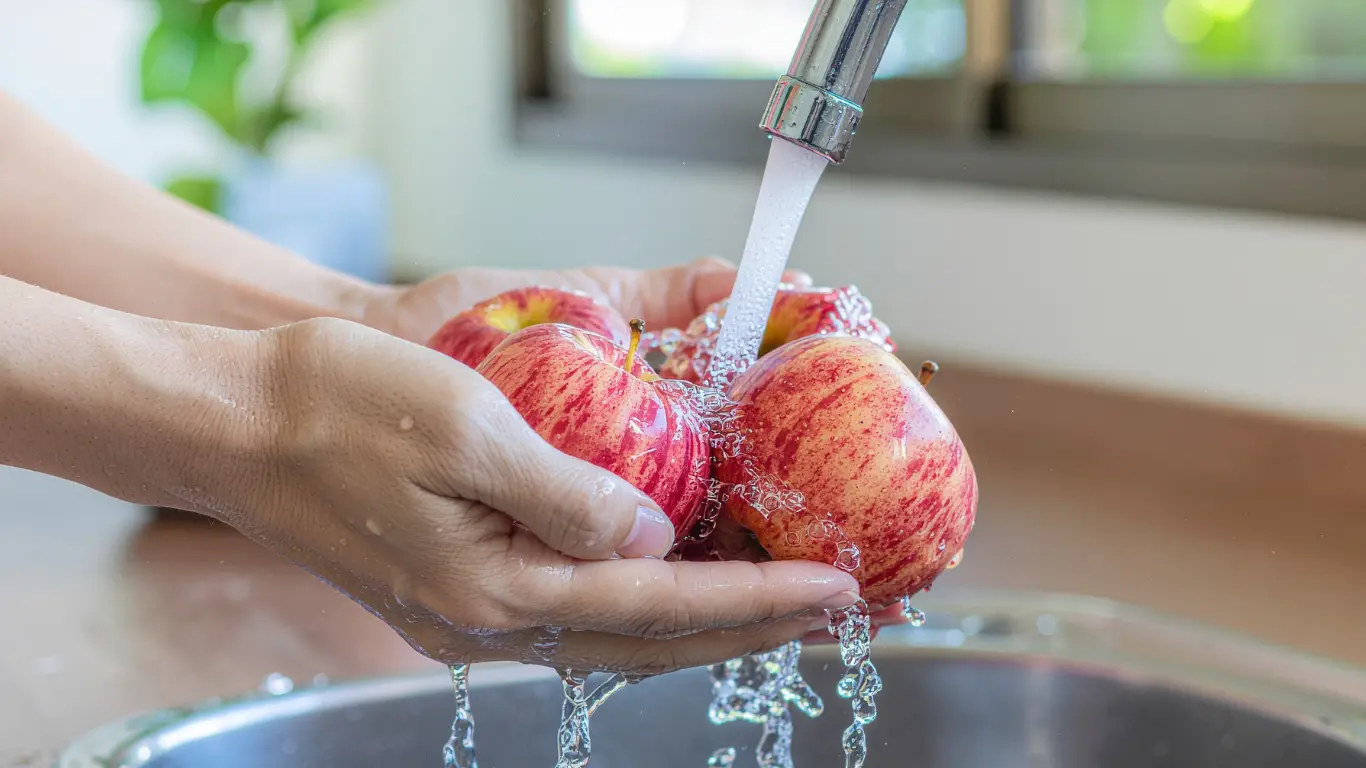
TL;DR: Based on EPA violation data, contaminant testing, and infrastructure assessments, the states with the worst tap water in 2026 are Texas, California, New York, New Jersey, Florida, Pennsylvania, Louisiana, Arizona, Wisconsin, and Massachusetts. The most common problems are PFAS, lead service lines, disinfection byproducts, arsenic, and nitrates. Nearly 45% of US tap water contains at least one PFAS compound.
No state in America has perfectly clean tap water. But some states have far more documented problems than others: more EPA violations, more contaminants detected at levels above health guidelines, more aging infrastructure delivering water through lead pipes, and more communities receiving boil-water notices.
The challenge for families is that tap water contamination is not always visible. You can drink water for years without knowing it contains PFAS, arsenic, or disinfection byproducts at levels that exceed what health researchers consider safe. The EPA regulates about 90 contaminants, but municipal systems can contain over 200 detectable substances, many of which have no enforceable federal limit.
This article walks through the data: which states rank worst, what contaminants define each state's problems, and what homeowners can do when the water coming out of their tap is not as clean as they assumed.
How Do We Define "Worst" Tap Water?
Rankings depend on what you measure. Different sources use different methodologies, which is why you will see varying lists. The most commonly used data includes:
- EPA Safe Drinking Water Act violations (total violations per state, population affected)
- Contaminant detections above health guidelines (EWG's database, which applies stricter health-based standards than EPA legal limits)
- Lead service line counts (a proxy for infrastructure age and lead risk)
- PFAS detections (using EPA's 2024 enforceable limits of 4 ppt for PFOA and PFOS)
- State-specific incidents (boil-water notices, contamination events, enforcement actions)
The states below appear consistently across multiple data sources. Some rank high because of sheer population size (more people served means more violations logged). Others rank high because of genuine, concentrated contamination problems that disproportionately affect certain communities.
Which States Have the Worst Tap Water in 2026?
1. Texas
Texas leads the nation in total drinking water violations with over 23,000 documented violations across its public water systems. More than 700 water systems serving 8.6 million people have exceeded EPA limits for total trihalomethanes (TTHMs), a group of disinfection byproducts linked to cancer risk with long-term exposure.
Groundwater-sourced systems in parts of the state show elevated arsenic concentrations above health-based recommendations. Nearly 50 Texas public water systems exceed the EPA's enforceable PFAS limits. In February 2025, Johnson County declared a state of disaster over PFAS contamination. Fort Worth filed a $420 million PFAS lawsuit in March 2025.
Texas also has one of the largest populations relying on private wells, which have zero mandatory testing requirements.
2. California
California's tap water contains up to 175 detectable contaminants across its public systems. An estimated 177 drinking water systems serving over 18.9 million people have had elevated PFAS levels. The state's Central Valley faces widespread nitrate and arsenic contamination in groundwater, driven by decades of intensive agriculture.
Residents in wildfire zones face an additional risk: benzene and vinyl chloride contamination from burned plastic pipes. After the Camp Fire in Paradise (2018), the Marshall Fire in Boulder County (2021), and the Palisades Fire in Los Angeles (2025), water systems were contaminated with carcinogens from infrastructure damage. California's drinking water has also shown elevated arsenic levels linked to adverse birth outcomes.
3. New York
New York's water systems contain up to 197 detectable contaminants. An estimated 189 drinking water systems serving over 1.3 million people have detected elevated PFAS. Approximately 299,000 lead service lines remain in use, including one of the highest concentration rates in Buffalo, where 45% of service lines are confirmed lead.
Over 20 million people across the state are exposed to tap water containing TTHMs, HAA5, and arsenic at concentrations exceeding EWG health guidelines, though many of these systems remain within EPA legal limits.
4. New Jersey
New Jersey has been a national epicenter for PFAS contamination. A private well in Warren County tested for some of the highest PFAS levels ever recorded in the state. PFOA levels in one system reached 36.1 ppt, over twice the state limit. The state has approximately 294,000 lead service lines, and 56% of schools tested positive for lead in water.
New Jersey has been an early adopter of strict PFAS standards, which means more testing and more detections. This is not necessarily a sign that New Jersey's water is worse than states that test less; it is a sign that testing reveals what has been there all along.
5. Florida
Florida's tap water contains up to 126 detectable contaminants. The city of Cocoa's water systems exceeded EWG guidelines by 308 times for HAA5 and 333 times for TTHMs. South Florida communities have detected PFAS above federal guidelines. Stuart received millions from 3M's class-action settlement for future filtration.
Florida's groundwater also faces saltwater intrusion along both coasts, agricultural runoff in central regions, and septic system contamination in areas without sewer infrastructure. The state's high water table makes aquifers particularly vulnerable.
6. Pennsylvania
Pennsylvania's tap water contains up to 123 detectable contaminants. More than 180 water providers detect PFAS above the new federal limits. More than half of private wells in the state do not meet drinking water standards, with around 40% showing high nitrate levels. The state has approximately 261,000 lead service lines.
A study found a toxic chloramine byproduct in one-third of Pennsylvania's drinking water. The USGS tested rivers and streams that serve as drinking water sources for Philadelphia and surrounding counties and found PFAS in 76% of samples.
7. Louisiana
Louisiana faces a combination of aging infrastructure, industrial pollution, and hurricane damage. Over 900 systems supply nearly 5 million people with water containing elevated TTHMs, HAA5, and other disinfection byproducts. A study by the Water Collaborative of Greater New Orleans found lead in 88% of homes tested, with some exceeding the EPA action level. Approximately 140,000 lead service lines remain in use.
8. Arizona
Arizona's water challenges are compounded by drought and scarcity. Nearly 30% of Arizona's water systems fail to meet new arsenic limits. Phoenix has among the highest levels of chromium-6 in any major US city's water system. PFAS contamination near Tucson International Airport has prompted EPA enforcement orders. Very hard water (285+ ppm) is a statewide quality-of-life issue.
9. Wisconsin
Wisconsin's tap water may contain up to 130 detectable contaminants. In one county, PFAS contaminated 97.3% of all wells tested, prompting the state to provide bottled water to over 1,700 families. Residents of Williams Bay were warned not to drink or cook with tap water after nitrite levels caused a confirmed case of "blue baby syndrome." Nitrate contamination from agriculture has persisted for five decades, and pesticides are present in over 40% of private potable wells.
10. Massachusetts
Massachusetts's tap water may contain up to 132 detectable contaminants. Over 80% of taps in schools and childcare centers tested positive for lead. The state has approximately 132,000 lead service lines. HAA5 exceedances recur in smaller communities, particularly during seasonal changes that affect river chemistry.
What Are the Most Common Contaminants Across These States?
Five categories of contaminants appear repeatedly:
PFAS ("forever chemicals"). The USGS found that 45% of US drinking water contains at least one PFAS compound (USGS, 2023). The EPA set enforceable limits in 2024 at 4 ppt for PFOA and PFOS, but the health goal is zero. Remediation costs for US water systems are estimated at $120 to $175 billion.
Lead. Millions of lead service lines remain in use across the country. There is no safe level of lead in drinking water. Children are especially vulnerable to neurological damage.
Disinfection byproducts (TTHMs and HAA5). These form when chlorine used to kill bacteria reacts with organic matter in the water. Long-term exposure is linked to increased cancer risk. They are especially prevalent in states with warm climates and high organic content in source water.
Arsenic. Naturally present in rock formations and elevated by industrial activity. The EPA MCL is 10 ppb. Arsenic is a known carcinogen linked to skin, bladder, and lung cancers.
Nitrates. Primarily from agricultural runoff and septic system leakage. At high levels, nitrates cause methemoglobinemia ("blue baby syndrome") in infants. The EPA MCL is 10 mg/L.
How Can You Check Your Own Tap Water?
Your state's data does not tell you what is in your tap. Water quality varies by utility, by neighborhood, and even by the age of your home's plumbing.
- Read your Consumer Confidence Report (CCR). Every public water system is required to publish an annual CCR listing detected contaminants. Ask your utility or search online for your system's report.
- Test your water independently. A home test kit costs $20 to $50 for basic panels. A comprehensive lab test covering metals, bacteria, nitrates, VOCs, and PFAS runs $200 to $400 through a state-certified laboratory.
- Check the EWG Tap Water Database. Enter your zip code at ewg.org/tapwater to see what has been detected in your local system and how it compares to health guidelines.
- Test for PFAS specifically. Standard water tests do not include PFAS. You need a test using EPA Method 537.1 or equivalent, which typically costs $150 to $300.
What Can You Do About It?
Once you know what is in your water, your options depend on the contaminant:
For specific contaminants (point-of-use filtration): A kitchen RO or activated carbon filter ($150 to $1,100 installed) addresses most drinking and cooking water concerns. NSF/ANSI 53 or 58 certified filters are verified to reduce PFAS, lead, and other contaminants. This is the right solution when your municipal water is generally safe but has specific contaminants you want to reduce at the tap.
For broad contamination (whole-house filtration): When contaminants affect showers, laundry, and every fixture, a whole-house system ($1,500 to $7,500+ installed) treats everything. For well owners dealing with multiple contaminants, see AWG vs Reverse Osmosis: Which Delivers Safer Water? for a detailed comparison of approaches. If you are on well water specifically, understanding what contaminants are most common in private wells is a useful starting point.
For homeowners who want to bypass the infrastructure entirely: Aquaria's Hydropack systems produce water by condensing humidity from the air. The water never passes through municipal pipes, never contacts the ground, and never carries the contaminants that accumulate in aging infrastructure. In independent lab testing by Microbac Laboratories, Pace Analytical, and EMSL Analytical, Hydropack water showed zero detectable PFAS (0 of 14 compounds), zero microplastics, zero lead, zero arsenic, zero bacteria, and a TDS of 4.54 mg/L, compared to 200 to 400 mg/L for typical tap water.
The Hydropack S starts at $13,999 ($137/month with financing, $0 down) and produces up to 66 gallons per day, connecting directly to home plumbing. For families in states with persistent water quality issues, it provides water that is independent of whatever is happening with municipal infrastructure or groundwater.
If you want to see whether a Hydropack makes sense for your home and climate, see how Aquaria's systems work.
Frequently Asked Questions
Which state has the worst tap water in the US?
Texas leads with over 23,000 documented EPA violations and more than 700 water systems with TTHM levels above legal limits, affecting 8.6 million people. California and New York follow closely due to widespread PFAS detections, lead infrastructure, and the sheer number of people exposed. However, rankings vary by methodology: Texas ranks worst by violation count, New York ranks worst by population affected.
Is tap water in the US safe to drink?
For most Americans, tap water that meets EPA standards is considered safe for daily use. The challenge is that EPA legal limits and health-based guidelines are not always the same thing. The EPA regulates about 90 contaminants, but over 200 can be detected in municipal systems. The USGS found that 45% of US drinking water contains at least one PFAS compound (USGS, 2023), and 27% of public water systems had at least one violation in 2022 (EPA).
Does boiling tap water remove contaminants?
No, not for chemical contaminants. Boiling kills bacteria and parasites, but it does not remove PFAS, lead, arsenic, disinfection byproducts, or VOCs. Boiling actually concentrates dissolved contaminants because the water volume decreases while the chemicals remain. Boiling is only appropriate for short-term microbial advisories.
How do I find out what's in my tap water?
Start with your utility's Consumer Confidence Report (CCR), published annually. Then enter your zip code at the EWG Tap Water Database (ewg.org/tapwater) for health-guideline comparisons. For a definitive answer, have your water tested by a state-certified lab ($200 to $400 for comprehensive panels). PFAS testing requires a specific test (EPA Method 537.1) that costs $150 to $300.
Can a water filter remove PFAS from tap water?
Yes, filters certified to NSF/ANSI 53 (activated carbon) or NSF/ANSI 58 (reverse osmosis) can significantly reduce PFAS levels. Look for filters that specifically list PFAS, PFOA, or PFOS reduction in their certifications. Not all filters are effective against PFAS, so certification matters. Alternatively, atmospheric water generators like Aquaria's Hydropack bypass the issue entirely: in independent testing by Pace Analytical, Hydropack water showed zero detectable PFAS across all 14 compounds tested.
Are private wells safer than municipal water?
No. Private wells are not regulated by the Safe Drinking Water Act and are not tested by any government agency. According to the USGS, more than 23% of private wells have at least one contaminant at health-risk levels. Forty million Americans on private wells have no PFAS monitoring whatsoever. Municipal water has problems, but it is at least tested and reported. Well owners must test on their own.
What contaminants should I test for?
At minimum: bacteria (total coliform and E. coli), nitrates, lead, TDS, and pH. Based on your location and risk factors, also consider testing for arsenic, PFAS (via EPA Method 537.1), VOCs, radon, and hardness. The CDC recommends annual testing for basic parameters. A comprehensive panel costs $200 to $400 through a certified lab.
Subscribe to our Newsletter
Get the latest updates, news and insights directly to your inbox
No payments for 6 months. Get your Hydropixel delivered free in the continental US.
Get Your Free Water Plan
Two quick steps. We'll send the right system size, expected output for your climate, and exact pricing — usually within one business day.