
TL;DR: An atmospheric water generator is worth it when your real alternative costs more than 10–25¢ per gallon over 10 years. For homeowners on safe, cheap municipal water, the answer is usually no. For homeowners facing failing wells, heavy bottled-water spend, water deliveries, or drought restrictions, the math typically favors AWG, sometimes decisively.
An atmospheric water generator (AWG) pulls drinking water from humidity in the air. The question of whether one is "worth it" has no universal answer, because the comparison depends entirely on what you'd otherwise be doing for water. A homeowner paying $30/month for clean municipal tap is comparing against a number an AWG cannot beat. A homeowner staring at a $70,000 well-drilling quote is comparing against a number an AWG beats handily.
This article walks through the math for both cases. Aquaria builds whole-home AWG systems (the Hydropack line, 24 to 2,600 gallons per day), so the per-gallon and financing figures here reflect real, deployed numbers, not theoretical brochure claims. Where competitor data is needed, we use peer-reviewed research and published industry figures.
What Does an Atmospheric Water Generator Actually Cost?
Atmospheric water generators come in two distinct categories, and conflating them is the single biggest reason "is it worth it?" articles produce contradictory answers.
Countertop AWGs are personal drinking-water units. They produce 2 to 8 gallons of water per day and cost roughly $1,500 to $4,500. They're designed for households that want bottled-quality water without the bottles. They cannot run plumbing fixtures.
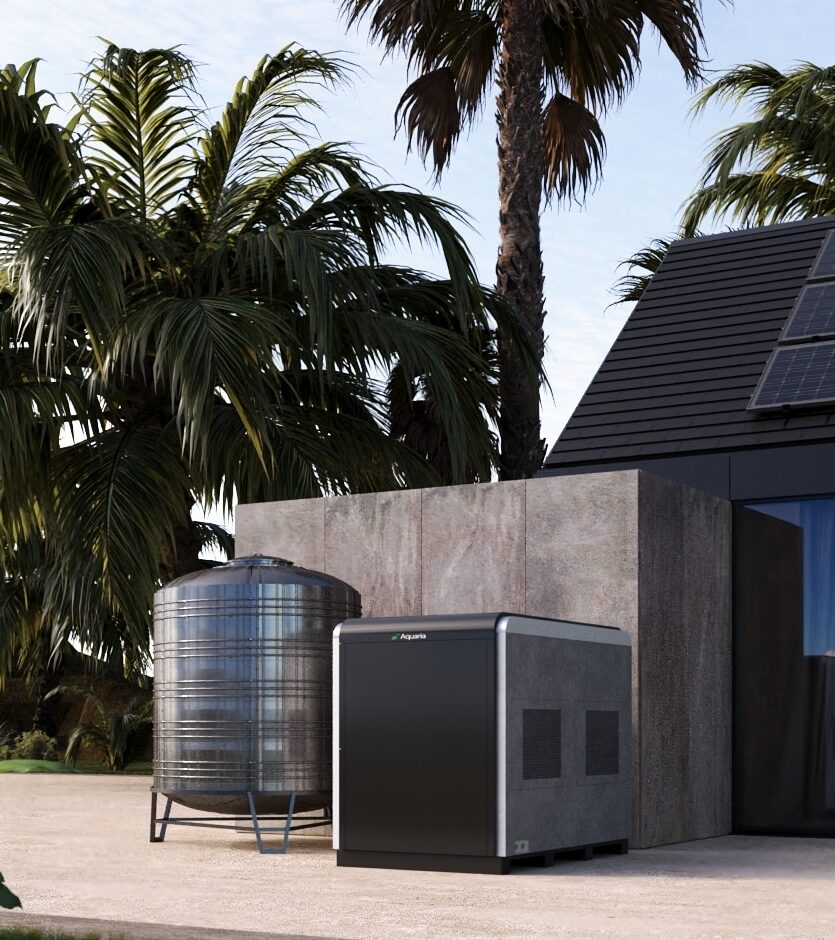
Whole-home AWGs integrate with your plumbing and produce 24 to 2,600 gallons per day depending on the model. Aquaria's Hydropack S produces up to 66 gallons per day; the Hydropack X scales into the 264+ gallon range, and larger commercial configurations go further. Pricing for whole-home systems ranges from roughly $10,000 to $40,000 installed, depending on output, storage, and site requirements.
The "worth it" question lands very differently between these categories. A countertop unit competes against bottled water. A whole-home unit competes against wells, water deliveries, and grid dependence. Read any review that gives a single verdict on whether AWG is "worth it" without naming the category, and you're reading a flawed analysis.
Operating costs scale with energy use. AWG systems in the broader category consume 200 to 800 watt-hours per liter of water produced, a wide spread that has more impact on 10-year ownership cost than the sticker price does. Maintenance is generally one to three filter and coil cleanings per year for whole-home units, costing $150 to $400 annually.
What's the Real Per-Gallon Cost of AWG Water?
A 2023 peer-reviewed techno-economic analysis by Akram Inayat and colleagues, "Techno-economic analysis of atmospheric water generation" published through PMC, modeled levelized AWG water costs at $0.06 to $0.40 per liter (roughly $0.23 to $1.51 per gallon) depending on climate, machine efficiency, and power source. The low end assumes high humidity and efficient hardware; the high end assumes dry conditions or older units.
Aquaria's published per-gallon figure for deployed Hydropack systems sits between 5 and 15 cents per gallon, on the favorable end of that academic range. Two factors put it there: the Hydropack platform is engineered for efficiency in the 30–80% relative-humidity band most U.S. homes sit in, and on-site solar pairing drops the operating cost further when power isn't being purchased.
If you want a quick way to estimate your own number: take your machine's rated daily output, multiply by 365 to get annual gallons, multiply by typical Wh/L (300 for efficient units, 600 for inefficient), and multiply by your local electricity rate. That gives operating cost. Add maintenance and amortized purchase price over 10 years, divide by total gallons, and you have your real cost per gallon.
For reference, the average U.S. municipal water rate is about $0.005 to $0.015 per gallon at the tap. Bottled water averages $1.20 to $2.00 per gallon. New well drilling, amortized over 10 years and divided by realistic household consumption, lands at 8 to 30 cents per gallon depending on drilling cost and well productivity. AWG sits in the middle of that range, which is exactly why the "worth it" question requires naming your alternative.
When Is an AWG NOT Worth It?
Leading with the contrarian case here, because if we don't, the rest of the article isn't credible.
You have safe, cheap municipal water. If your tap water is reliable, tests clean for the contaminants you care about, and costs you under $50/month, an AWG is almost certainly not worth it. A reverse-osmosis system under your sink for $300 to $1,200 will handle most concerns about purity at a fraction of the cost.
Your humidity is persistently below 30%. AWG production drops sharply in arid climates. Phoenix, Las Vegas, Albuquerque, and parts of the Mountain West see months with average humidity below 25%. AWG production in those conditions is near zero. A storage tank and aggressive scheduling can salvage some output, but the math gets ugly. Most reputable AWG manufacturers will tell you this; we will too.
You only want drinking water and you're not a heavy bottled-water household. If you're spending under $400 a year on bottled water and you have decent tap, the payback period on even a $2,000 countertop unit stretches past five years. That's fine if you value not generating plastic waste, but it doesn't pencil out as a financial decision.
You can't or won't run the unit consistently. AWG economics depend on production. A unit that sits idle most of the year ends up with a punishing per-gallon cost. If your situation only calls for occasional water, a backup tank and rainwater catchment may serve you better.
The "60x more expensive than tap" verdict that appears in some popular reviews is accurate for exactly this case: a countertop AWG running against safe, cheap municipal water. It's the wrong comparison for the situations below.
When Is an AWG Worth It?
The cases where the math typically favors AWG share one feature: the real alternative is expensive, unreliable, or both.
Your well failed or is failing. New residential well drilling in the U.S. ranges from $40,000 to over $100,000 depending on geology, depth, and yield, and there's no production guarantee. In parts of Texas, California, and the Mountain West, dry holes are common. A whole-home Hydropack that produces water reliably from air, with financing around $137/month under 20-year terms (cited in Aquaria's How to Choose an Atmospheric Water Generator framework), competes directly with a $70,000 drilling check that may not produce a working well. For homeowners in this situation, AWG isn't even close, it wins on cost certainty alone. See our step-by-step guide for when your well runs dry for the broader option set.
You're a heavy bottled-water household. A family of four buying premium bottled water spends $1,200 to $2,400 per year, or $12,000 to $24,000 over 10 years. A countertop AWG at $2,500 with reasonable humidity pays for itself in 18 to 36 months at the high end of bottled-water spend. A whole-home AWG only makes sense at this consumption level if you also have other reasons to want it (independence, well backup, plumbing-grade output).
You live under drought restrictions. Parts of California, Arizona, Nevada, Texas, and Utah have moved to mandatory irrigation cuts, building moratoriums, or per-household water allocations. A whole-home AWG produces water that isn't subject to municipal allocation. For a homeowner already paying for the alternative (water deliveries at $0.25 to $1.00 per gallon hauled, or restricted lifestyle), the comparison favors AWG quickly.
You're building off-grid or filling out a resilience stack. Solar + battery homeowners who already invested $40,000–$80,000 to leave grid dependence behind often see water as the last piece. The cleanest way to think about it: what solar panels and a Powerwall did for electricity, an AWG and a storage tank do for water. The comparison here isn't dollars per gallon, it's the cost of completing independence versus continuing to depend on one untouched piece of infrastructure. According to the American Society of Civil Engineers' 2025 Drinking Water Infrastructure Report Card, U.S. drinking water infrastructure earned a C-. For homeowners building around that reality, AWG is reasonable insurance.
How Does AWG Compare to Your Real Alternatives?
AlternativeUpfront cost10-year totalWhat you getDrill a new well$40,000–$100,000+$42,000–$110,000 (plus pump replacement)Variable yield, no production guaranteeBottled water (family of 4)~$0$12,000–$24,000Drinking only; plastic waste; no plumbing supplyReverse osmosis on municipal tap$300–$1,200$1,500–$3,000 with filter changesCleaner drinking water; still grid-dependentWater deliveries (haul + storage)$2,000–$8,000 storage$9,000–$36,000+Reliable but ongoing labor and price exposureWhole-home AWG (Hydropack-class)$15,000–$40,000 installed$20,000–$50,000 incl. operatingPlumbing-grade water from air; financing available
The right column matters more than the cost column. A new well at $70,000 that comes in dry is worth $0; a whole-home AWG at $25,000 that produces 80–130 gallons per day for 15 years is worth what it produces.
How Long Does an AWG Take to Pay for Itself?
Payback depends on what you're replacing.
- Replacing a $70,000 well drilling decision: AWG pays back immediately. The Hydropack is the cheaper line item on day one.
- Replacing $2,400/year in bottled water: A $2,500 countertop unit pays back in roughly 14 months. A $20,000 whole-home unit pays back in about 8 years if bottled water is the only alternative being replaced (rarely the case in practice).
- Replacing safe, cheap municipal tap: Never. The AWG is more expensive per gallon. The decision has to be justified on something other than cost (resilience, independence, contamination concerns).
- Replacing water deliveries at $0.50/gallon: A whole-home Hydropack typically pays back in 4 to 7 years depending on consumption.
These numbers ignore the value of the things AWG provides that the alternatives don't: independence from grid water, freedom from municipal restrictions, plumbing-grade output that doesn't depend on a well that might fail. Whether those carry weight is a personal calculation.
What About Financing?
A $25,000 Hydropack at roughly $137 per month with 20-year financing changes the comparison meaningfully. A $137/month line item sits in the same range as a midsized utility bill. Compared to $200/month in bottled water and filter changes, or a $70,000 well-drilling check, the monthly framing reflects the actual cost of getting reliable household water differently than the sticker price does. Financing terms vary by credit, system size, and program; see Aquaria's How to Choose an Atmospheric Water Generator for current options.
Financing is also what makes AWG competitive with municipal alternatives for homeowners who don't have the cash to drill a well or buy outright. The 20-year term reflects the equipment's useful life: well-built whole-home AWGs are designed for 15+ years of operation, with the core mechanical components (compressor, coils, controls) typically warranted for 3 to 5 years and replaceable beyond that.
How Do You Decide?
The framework is straightforward.
- Name your real alternative. Not "tap water" generically, but the specific cost path you're on. Is your well failing? Are you spending $200/month on bottled? Are you under drought restrictions? Are you building off-grid?
- Calculate your alternative's 10-year cost honestly, including likely failures (a $70,000 well that might come in dry; bottled water price inflation; municipal rates rising three times faster than inflation according to Diego S. Cardoso and Casey J. Wichman in "Water affordability in the United States," Water Resources Research, 2022, with U.S. utility rates up 43% over the last decade per Bluefield Research).
- Compare to an AWG configured for your output needs, financed if appropriate.
- Ask whether the things AWG provides that the alternatives don't (independence, plumbing-grade output, freedom from restrictions) matter to your situation.
If your alternative costs more than 10–25¢ per gallon over 10 years, AWG is usually worth it. Below that, it usually isn't. The honesty of that answer is what makes the comparison defensible. For a deeper buying framework, our How to Choose an Atmospheric Water Generator guide walks through capacity sizing, climate fit, and installation considerations.
If you're weighing this for your own property, a conversation with an Aquaria advisor will get you a per-gallon estimate for your climate and consumption, including the cases where we'd tell you not to buy. Book a call with an Aquaria advisor to talk through your setup.
Frequently Asked Questions
Is an atmospheric water generator cheaper than bottled water?
Yes, eventually, for households that buy bottled water heavily. A $2,500 countertop AWG pays back in 12 to 24 months for a family of four spending $200/month on premium bottled. Light bottled-water households (under $400/year) take 5+ years to break even, which usually isn't worth the upfront commitment.
How much does it cost to run an AWG per month?
Operating cost for a whole-home Hydropack-class unit producing 80 gallons per day at typical U.S. electricity rates is roughly $25 to $60 per month, depending on humidity and energy efficiency. Countertop units producing 2 to 5 gallons per day run $5 to $15 per month.
Does an AWG pay for itself?
Sometimes, depending on the alternative. Compared to drilling a $70,000 well that might come in dry, an AWG pays back immediately. Compared to safe, cheap municipal tap water at $30/month, it never pays back on cost alone. Most situations fall somewhere in between, with payback periods of 2 to 8 years.
Can I finance an atmospheric water generator?
Yes. Aquaria offers Hydropack financing starting at roughly $137 per month with 20-year terms, available with $0 down for qualifying buyers. The monthly framing makes whole-home AWG comparable to a midsized utility bill rather than a five-figure upfront purchase.
How long does an AWG last?
Whole-home AWG systems are typically designed for 15 to 20 years of operation. Core mechanical components (compressor, coils) are usually warranted for 3 to 5 years; the chassis and water-handling components often outlast the warranty by a decade. Cheap countertop units may last only 3 to 5 years, which is why total cost of ownership beats sticker price.
Is an AWG worth it in a dry climate?
Generally no, below roughly 30% relative humidity, AWG production drops sharply. Parts of Arizona, Nevada, and inland Southern California fall below this threshold for months at a time. Storage tanks and seasonal scheduling can recover some output, but a homeowner in a persistently dry climate should look at rainwater harvesting, water deliveries, or grid hookup before AWG.
What's the cheapest atmospheric water generator?
The cheapest unit on the market is usually the wrong answer. Sub-$1,000 countertop units typically use inefficient compressors (600+ Wh/L), have limited filtration, and last 2 to 4 years. A reasonable countertop unit runs $1,500 to $3,000; a whole-home system starts around $15,000 installed. In both categories, total cost of ownership over 10 years beats sticker price as a buying signal.
Subscribe to our Newsletter
Get the latest updates, news and insights directly to your inbox
No payments for 6 months on any Hydropack. Get your Hydropixel delivered free in the continental US.
Get Your Free Water Plan
Two quick steps. We'll send the right system size, expected output for your climate, and exact pricing — usually within one business day.