
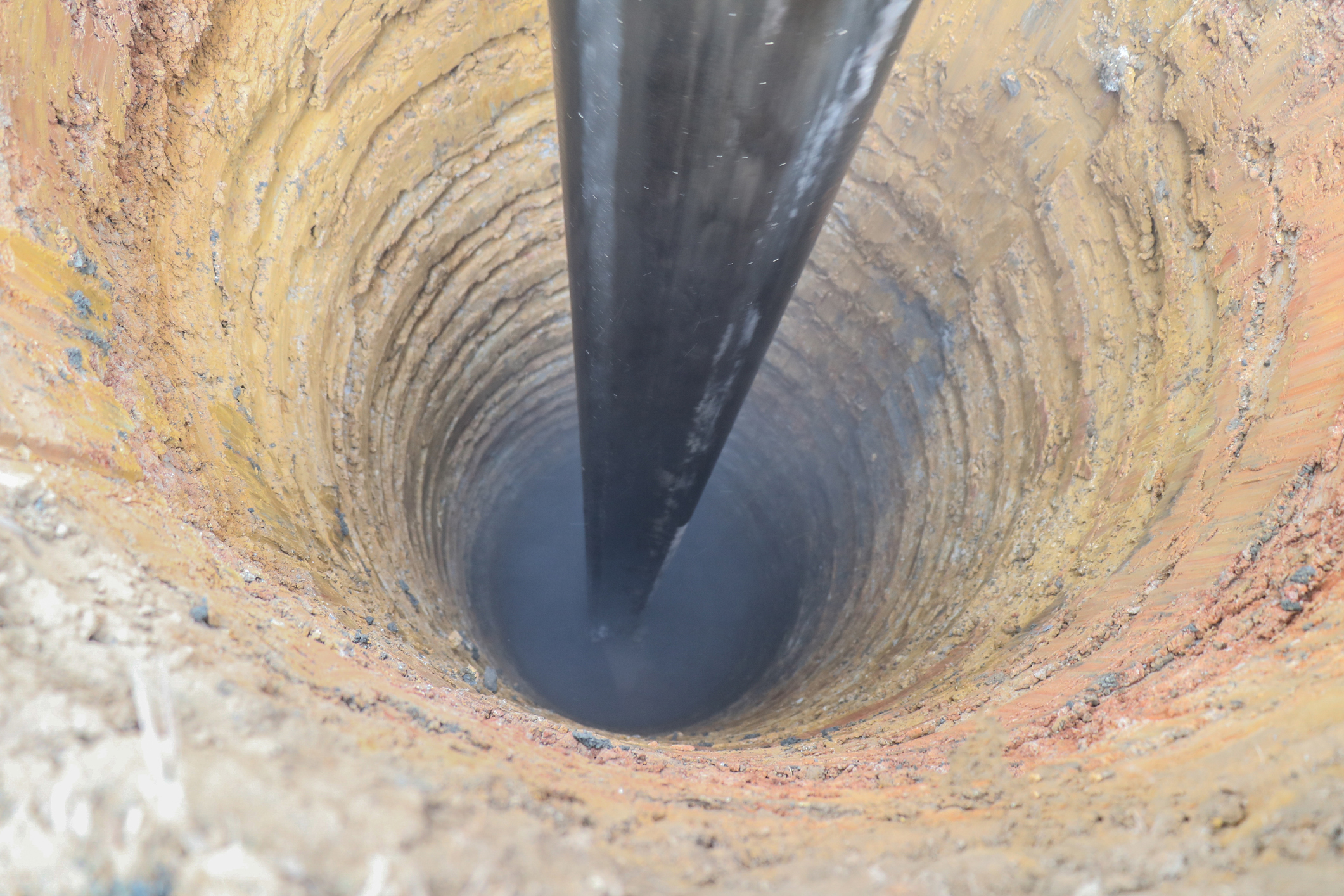
TL;DR The most common warning signs of well water contamination are unusual smells (rotten egg, chemical, detergent), staining (orange, brown, blue-green, or black), changes in taste (metallic, salty, soapy), and cloudy or sediment-laden water. Each sign points to a specific category of contamination, and each has a different fix. Some you can solve with a filter at the point of entry. Some you can't — because the contamination isn't in the plumbing, it's in the aquifer. This guide walks you through which is which.
Key facts most homeowners miss
- The EPA recommends testing your private well every year for total coliform bacteria, nitrates, total dissolved solids, and pH — not just when something looks wrong (EPA, "Protect Your Home's Water," February 2026).
- More than 40 million Americans drink from private wells. Unlike public utilities, those wells fall outside federal Safe Drinking Water Act monitoring — no required testing, no required disclosure.
- 45% of U.S. drinking water contains at least one PFAS "forever chemical," and PFAS detection rates were similar between private wells and public-supply tap water in the same 2023 USGS-led study (Smalling et al., Environment International, June 2023).
- Test immediately — not next year — if there's been flooding, well repair, new nearby construction or industrial activity, or any noticeable change in your water (EPA, February 2026).
What are the most common warning signs of well water contamination?
Most well water contamination announces itself before a lab test catches it. The trick is reading the signal correctly.
We've spent the last few years sitting at kitchen tables with homeowners across Texas and other drought-stressed states. The conversation usually starts the same way: a neighbor had a problem, the county sent a notice, or the water just started to look or taste different. Brian S. in the Central Texas Hill Country called us when his well was producing less every season — and he had just been quoted $70,000 to drill deeper. The same handful of warning signs come up again and again. Here's the diagnostic shortcut we use.
Visible signs
- Orange, brown, or reddish staining on sinks, toilets, dishwasher, or laundry: almost always dissolved iron. Sometimes manganese.
- Black flecks or grey-black streaks: manganese, often paired with iron.
- Blue or blue-green staining on copper fixtures: acidic water dissolving copper out of your pipes. The metal in your water is coming from your plumbing, not the well — but the acidity is from the aquifer.
- Cloudy, gritty, or sandy water: sediment, silt, or rust getting past the well screen. Sometimes a failing pump pulling sand.
Frothy or foaming water: possible septic seepage into the well.
Smells
- Rotten egg: hydrogen sulfide gas from sulfur-reducing bacteria or naturally high sulfur content. If it only smells when you run hot water, the source is a corroding water-heater anode — not the well.
- Gasoline or solvent: fuel oil, gasoline, or volatile organic compounds (VOCs) leaching from a buried tank, gas station, or chemical site nearby. This is the urgent one.
- Detergent or musty smell with foam: sewage or septic seepage.
- Earthy, musty, or "lake water": decaying organic matter in the well.
- Chlorine: only normal if you recently shock-chlorinated. Otherwise unusual for a private well.
Tastes
- Metallic: iron, manganese, or acidic water dissolving plumbing metals.
- Salty or brackish: chloride and sodium. On the coast, this often means saltwater intrusion. Inland, it usually means road salt runoff or septic leakage.
- Soapy or alkaline: high dissolved minerals.
- Chemical or "wrong": pesticides or VOCs. Stop drinking it and call your county health department.
If your water tastes, smells, and looks fine, that doesn't mean it's safe. Some of the most dangerous contaminants — nitrate, arsenic, PFAS, lead, radon, and coliform bacteria — are completely tasteless, odorless, and colorless. The EPA's "Protect Your Home's Water" guidance is direct on this: many serious contaminants give no sensory clue at all. The senses catch the noisy stuff. A lab catches the rest.
What causes well water to become contaminated?
Groundwater becomes contaminated when something on or near the surface — or naturally present in the rock — reaches the aquifer your well draws from. For homeowners in rural Texas, California, and the Carolinas, the cause is usually one of a handful of nearby land uses. The CDC groups the common sources into a short list:
- Septic systems that aren't working correctly
- Leaks from underground fuel storage tanks
- Landfill leachate
- Agricultural fertilizers, pesticides, and animal-waste runoff
- Stormwater runoff from cities or industrial sites
- Naturally occurring chemicals in the surrounding rock — including arsenic, radon, fluoride, and uranium
- Animal feedlots uphill or up-gradient of the well
The CDC's siting recommendations are a useful sanity check. A well should be at least 50 feet from a septic tank or livestock yard, 100 feet from a petroleum tank, and 250 feet from a manure stack. If your well doesn't meet those distances, and a lot of older rural wells don't, that's your first clue about what to test for.
Shallow wells are more exposed than deep wells. So are wells in karst limestone, glacial outwash, or fractured-bedrock geology, where surface water can move down into the aquifer in days instead of decades. Heavy rain, snowmelt, or local flooding can push contaminants past a well casing that was fine in dry conditions.
One thing worth calling out specifically: PFAS contamination is not rare, and it doesn't respect well depth. The 2023 USGS-led study sampled both public-supply tap water and private-well tap water across the United States and found PFAS detection probabilities and concentrations similar between the two. The assumption that "my well is deep, I'm fine" doesn't hold for forever chemicals. PFAS migrate through groundwater for decades.
How do I know if my well water is unsafe to drink?
There's one reliable answer: test it at a state-certified lab. Symptoms are a prompt to test, not a substitute for testing.
The EPA's minimum annual panel for a private well is total coliform bacteria, nitrates, total dissolved solids, and pH. Add to that based on what's around you:
- Nearby agriculture: nitrate, nitrite, pesticides, coliform
- Nearby gas station, dry cleaner, factory, or buried fuel tanks: VOCs, chloride, TDS, metals
- Older lead pipes, fittings, or solder: lead, copper, pH
- Radon-rich region: radon
- Salty taste or coastal proximity: chloride, sodium, TDS
- Suspected PFAS exposure (military base, firefighting foam site, certain industrial activity): PFAS panel
A few contaminants need particular attention. Nitrate at high levels causes methemoglobinemia — "blue baby syndrome" — in infants under six months, which can be fatal within days. If you have or are expecting an infant, test for nitrate and coliform before the baby comes home. If the well tests positive, the CDC recommends using bottled water for formula preparation until the well tests clean.
Coliform or E. coli in the panel means something biological is reaching your water. Shock-chlorinate immediately and re-test in 7 to 14 days. If it comes back positive, the well casing or seal is likely compromised. That's a well-system problem, not a treatment problem.
If you're not sure what to test for, call your county or state health department's environmental health division. Most will send a list of certified labs and recommend a starting panel for your area.
What contaminants can a home filter actually remove, and which ones can't?
This is where most homeowners get stuck. Treatment systems work — for the contaminants they're designed for. They don't work for everything.
Here's the landscape, ordered the way we'd walk a homeowner through it at the kitchen table:
Look at the last column again. Carbon, reverse osmosis, ion exchange, those technologies do work. But they're catchers, not problem-solvers. Every gallon of contaminated water you treat is a gallon that came up out of your well. Every cartridge is a piece of consumables you eventually replace and dispose of. For the worst contaminants, the cost of "keeping up" grows over time.
For most well water problems, that tradeoff is fine. A whole-home iron filter and a UV system on a healthy well is a perfectly good answer for orange staining and bacterial risk. A water softener will deal with hardness for a decade or more. The point isn't that filtration is wrong. The point is that filtration has a ceiling, and a small but important number of well water situations sit above that ceiling.
When does well water contamination mean the well itself is the problem?
This is the question most articles don't answer directly. There are four scenarios where the contamination isn't a treatment problem — it's a source problem.
1. PFAS contamination of the aquifer. When the forever chemicals are in your groundwater, every consumer-grade filter you install is a holding action. Activated carbon helps. Reverse osmosis helps more. But both media eventually saturate, both create a hazardous-waste disposal problem on your property, and PFAS regulations and detection limits keep tightening. What passes today may fail tomorrow.
2. Saltwater intrusion in coastal aquifers. When the ocean has reached your well, point-of-entry reverse osmosis can produce drinkable water at the kitchen tap — but it can't keep up with whole-house demand: laundry, showers, irrigation, outbuildings. The brine waste is its own disposal problem. For coastal households with real water use, this is the situation where filtration as a long-term strategy stops penciling out.
3. Chronic bacterial contamination from compromised well infrastructure. If your well keeps testing positive for coliform after shock chlorination, the casing, seal, or grouting is the issue. UV disinfection masks the symptom, but the structural breach is still there. Replacing a well casing — or drilling a new well — is a $40,000 to $100,000+ project with no guarantee of cleaner output from the same compromised aquifer.
4. A failing or dropping aquifer. In the U.S. Southwest, parts of the Great Plains, Central Texas, and increasingly the Southeast, residential wells that were adequate twenty years ago are pumping less water of worse quality. Drilling deeper costs more. Sometimes the deeper water is more mineralized, or contains naturally occurring arsenic or fluoride.
In any of these four situations, the real question is: what does it actually cost to solve this at the source — rather than treat it forever?
The conventional answer is "drill a new well." That can run $40,000 to $100,000+ in Texas, California, and parts of the Carolinas, with no guarantee of hitting better water. You may end up paying that money to draw from the same compromised aquifer at a different depth.
There's now a second answer, and it's the reason this matters to us specifically. Atmospheric water generation pulls water directly from humidity in the air, bypassing the aquifer entirely. Independent labs — Microbac Laboratories, Pace Analytical, and EMSL Analytical — tested samples from a working Aquaria Hydropack in Austin, Texas. The samples measured 4.54 mg/L total dissolved solids and returned non-detect results for PFAS, chlorine, and microplastics in the samples analyzed. The lab reports are on our website. The water source is humidity. Humidity doesn't carry PFAS from a chemical plant, doesn't carry agricultural nitrate, doesn't carry salt.
One important caveat. For most well owners, an iron filter, a softener, and a UV system are exactly the right answer. Atmospheric water generation is the answer when treatment has hit a ceiling — when the contamination is structural, the source is compromised, or the alternative is a $70,000 drilling project that may not even fix the underlying issue.
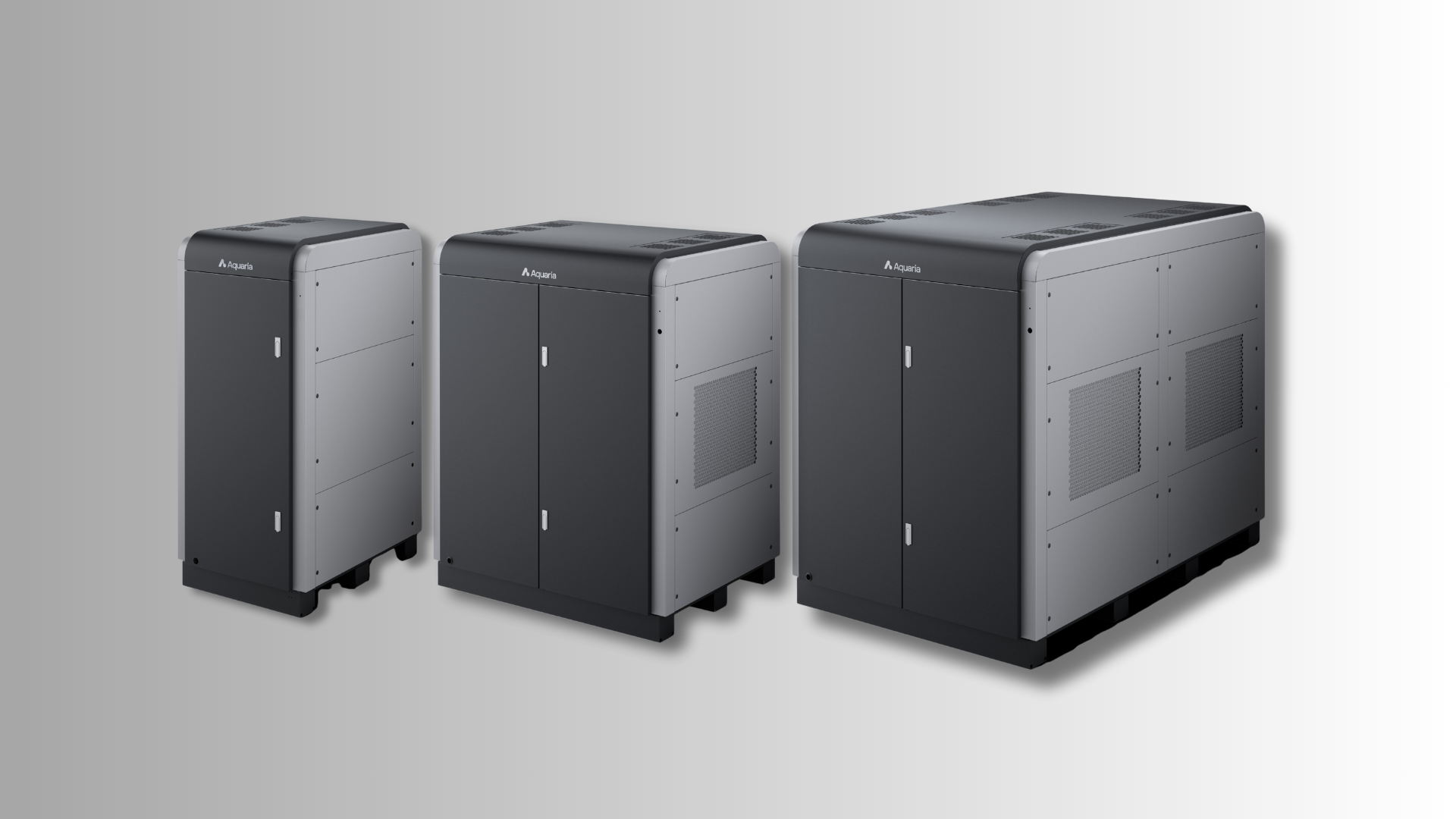
Sizing roughly maps to the scenario. Households facing PFAS in the aquifer or chronic bacterial issues but with normal household demand usually fit the Hydropack S (66 gal/day) or Hydropack (132 gal/day). Coastal homes dealing with saltwater intrusion typically need the Hydropack or Hydropack X (264 gal/day) to cover whole-house demand including laundry, showers, and irrigation. Off-grid properties, ranches, and households pairing AWG with solar most often choose the Hydropack X.
Book a call with an Aquaria Water Expert. We'll walk through your situation and tell you whether AWG makes sense for your home, and whether it doesn't.
Related reading
- AWG vs. Well Water: Which Is Right for Your Home? — when AWG actually pencils out against a well.
- Your Well Is Running Dry: What to Do — next steps when the well is already failing.
- Is Drilling a Well Worth It? 2026 Cost and Predictability Guide — the math on new wells.
- PFAS in My Water: What to Do About It — the step-by-step if PFAS triggered your search.
Frequently Asked Questions
Can I drink my well water if it smells like rotten eggs?
Probably, but get it tested. The rotten-egg smell is almost always hydrogen sulfide gas — unpleasant but not directly harmful at the levels typically found in residential wells. The bigger concern is what often comes with it: sulfur-reducing bacteria in the well, which can signal other bacterial problems. Test for total coliform and E. coli before you assume it's just a smell.
How often should I test my well water?
At least once a year for total coliform bacteria, nitrates, total dissolved solids, and pH, the EPA's minimum recommendation. Test immediately after flooding, well repair, new nearby construction, or any noticeable change in how the water looks, tastes, or smells. If you have an infant in the home or one on the way, test for nitrate before the baby comes home.
Does boiling well water remove contaminants?
Partially. Boiling kills bacteria, viruses, and parasites. It doesn't remove nitrate, PFAS, lead, arsenic, pesticides, or other chemical contaminants. By evaporating water, boiling can actually concentrate them. Use boiling as an emergency response to suspected microbial contamination, not as a long-term treatment strategy.
Can a water filter remove PFAS from well water?
Yes, but only temporarily. Activated carbon filters reduce PFAS. Reverse osmosis reduces them further. Neither permanently eliminates them. The media saturate over time and have to be replaced and disposed of as hazardous waste. For homes with confirmed PFAS in the well, treatment is a holding action — not a permanent fix.
How much does it cost to fix a contaminated well?
It depends on what's wrong. A whole-home iron filter runs roughly $1,500 to $3,500 installed. A UV disinfection system is $700 to $2,000. A water softener is $1,200 to $3,000. Whole-home reverse osmosis is $5,000 to $15,000+ with ongoing membrane and wastewater costs. Drilling a new well typically runs $40,000 to $100,000+ in the high-cost regions, with no guarantee of better water at the bottom.
What should I do if my well water tests positive for bacteria?
Stop drinking the water — or boil for at least one minute as a short-term fix. Shock-chlorinate the well by pouring household bleach in, circulating it through the plumbing, letting it sit for 12 to 24 hours, and flushing. Re-test in 7 to 14 days. If it comes back positive, the well casing, seal, or grouting is likely the issue, and you'll need a licensed well contractor — not just a treatment system.
Is well water safe if it looks and tastes fine?
Not necessarily. The most serious contaminants — nitrate, arsenic, PFAS, lead, radon, and coliform bacteria — are tasteless, odorless, and colorless. The senses catch iron, sulfur, hardness, and obvious sediment. Annual lab testing is the only way to catch the rest.
Subscribe to our Newsletter
Get the latest updates, news and insights directly to your inbox
No payments for 6 months on any Hydropack. Get your Hydropixel delivered free in the continental US.
Get Your Free Water Plan
Two quick steps. We'll send the right system size, expected output for your climate, and exact pricing — usually within one business day.